The Plant Doctor
When George was a baby, somebody stole him. He grew up to bring a whole state's soil back to life.
The Plant Doctor
Who is in this story
George
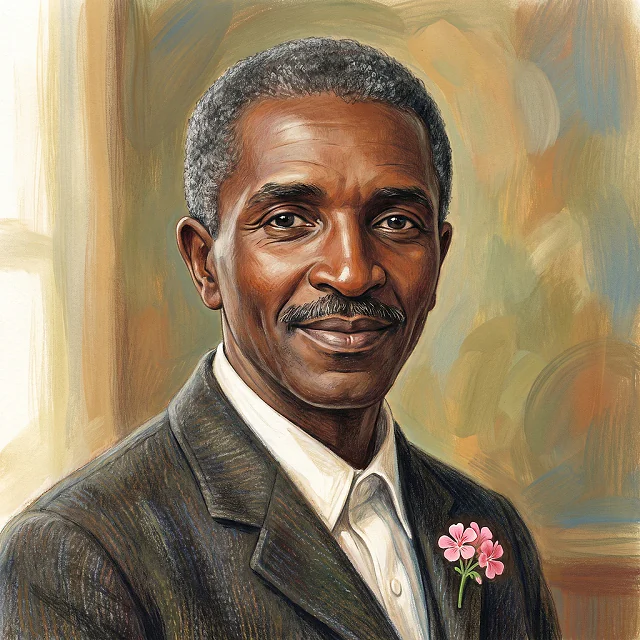
A quiet boy who healed sick plants, and grew up to teach farmers to heal their soil.
Susan Carver
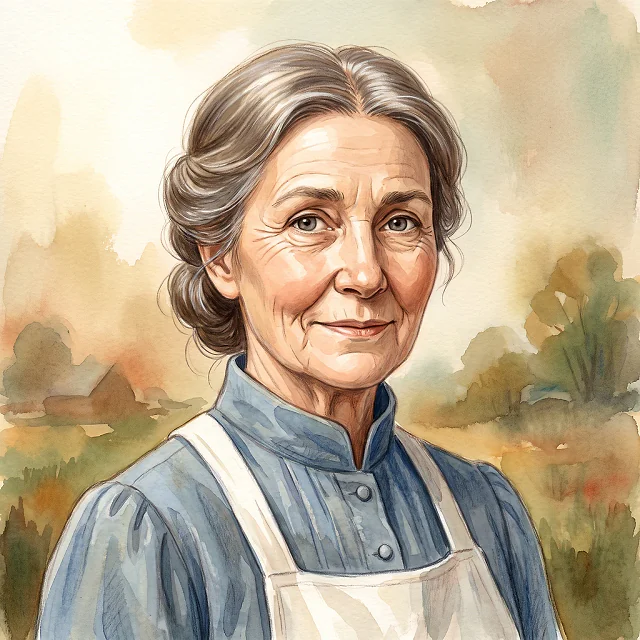
She raised George and taught him his letters.
The farmers
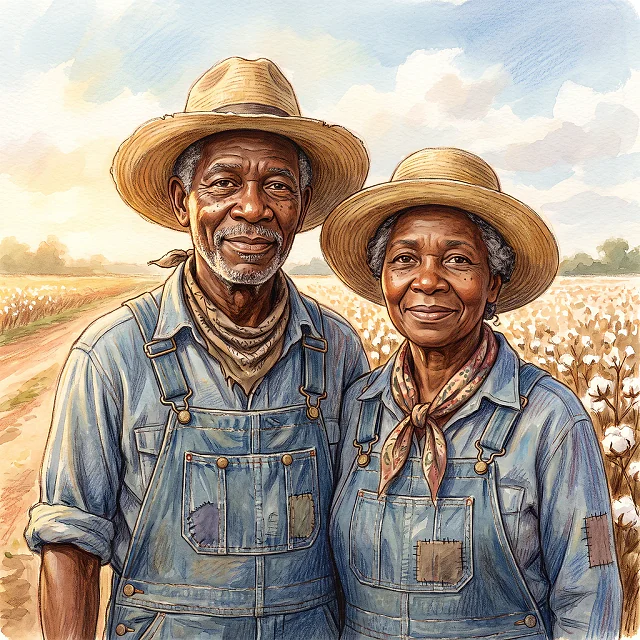
They stared at him when he said peanuts. Then one of them tried it.
Did you catch it?
1 of 5Why did the neighbours call George the plant doctor?
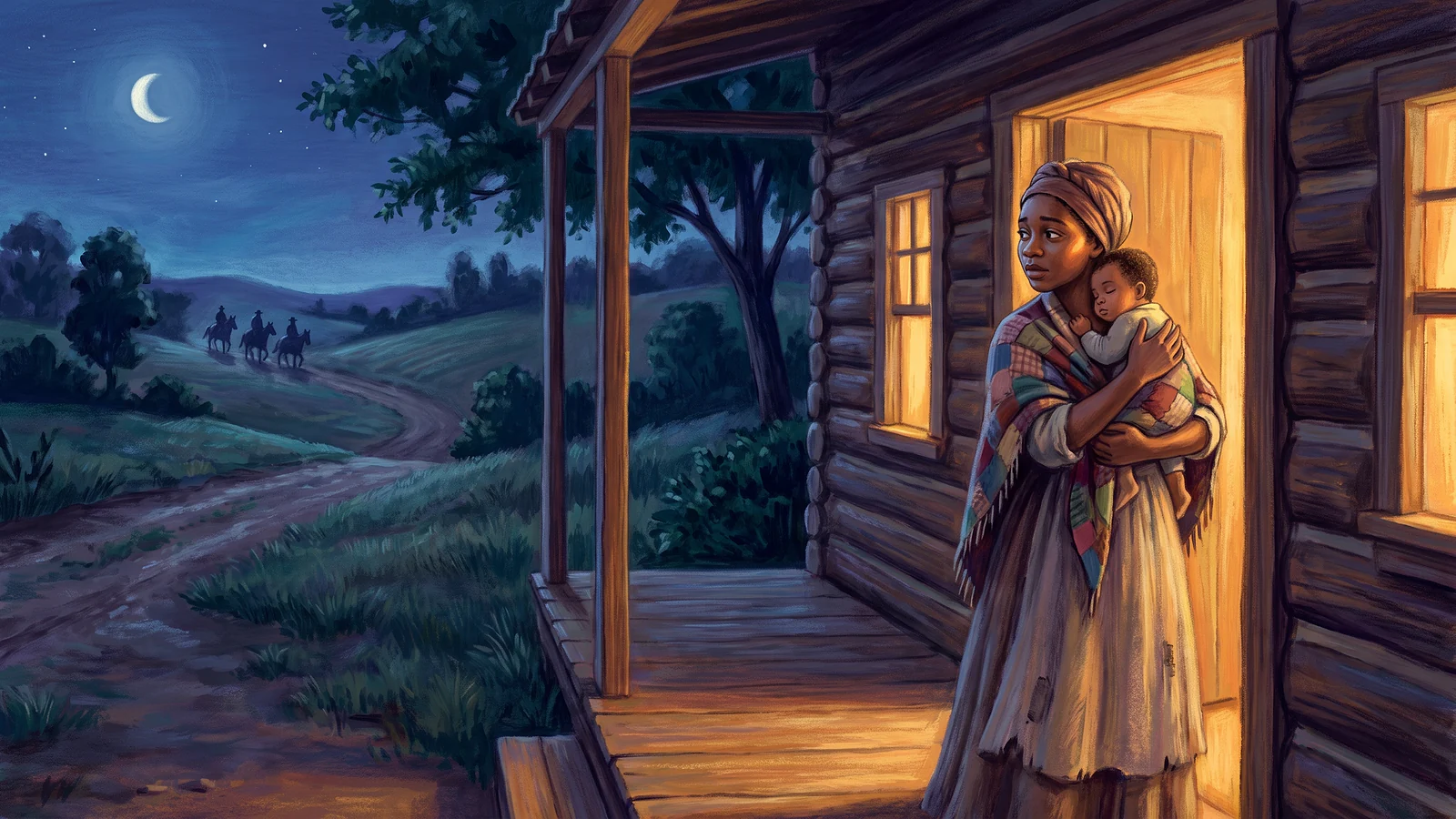
When George was a baby, somebody stole him.
That really happened. He was born on a farm in Missouri, long ago, and he was born into slavery. That means people said they owned him, the way you might own a chair. A baby. It was wrong, and it is over now.
One night, men on horses came in the dark. They carried off George, and his mother, and his sister.
A man went after them and brought the baby home.
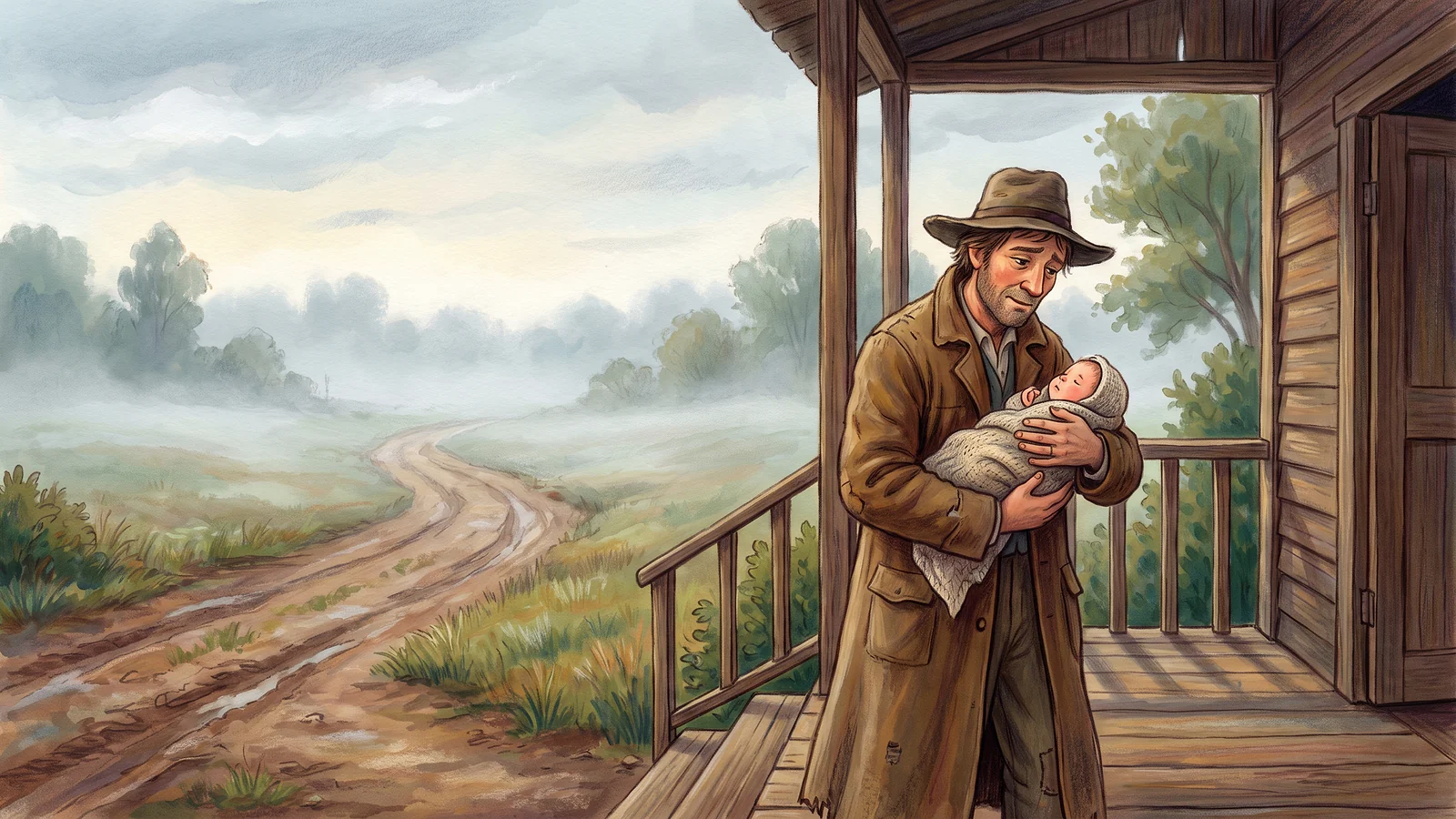
He never found the other two.
That is a hard way to begin a life. But George was not left on his own. Moses and Susan Carver, who had owned his mother, raised him after slavery ended and gave him their name. Susan taught him his letters at the kitchen table.
George was small and often sick, so nobody sent him out to work in the fields. Instead, he went into the woods.
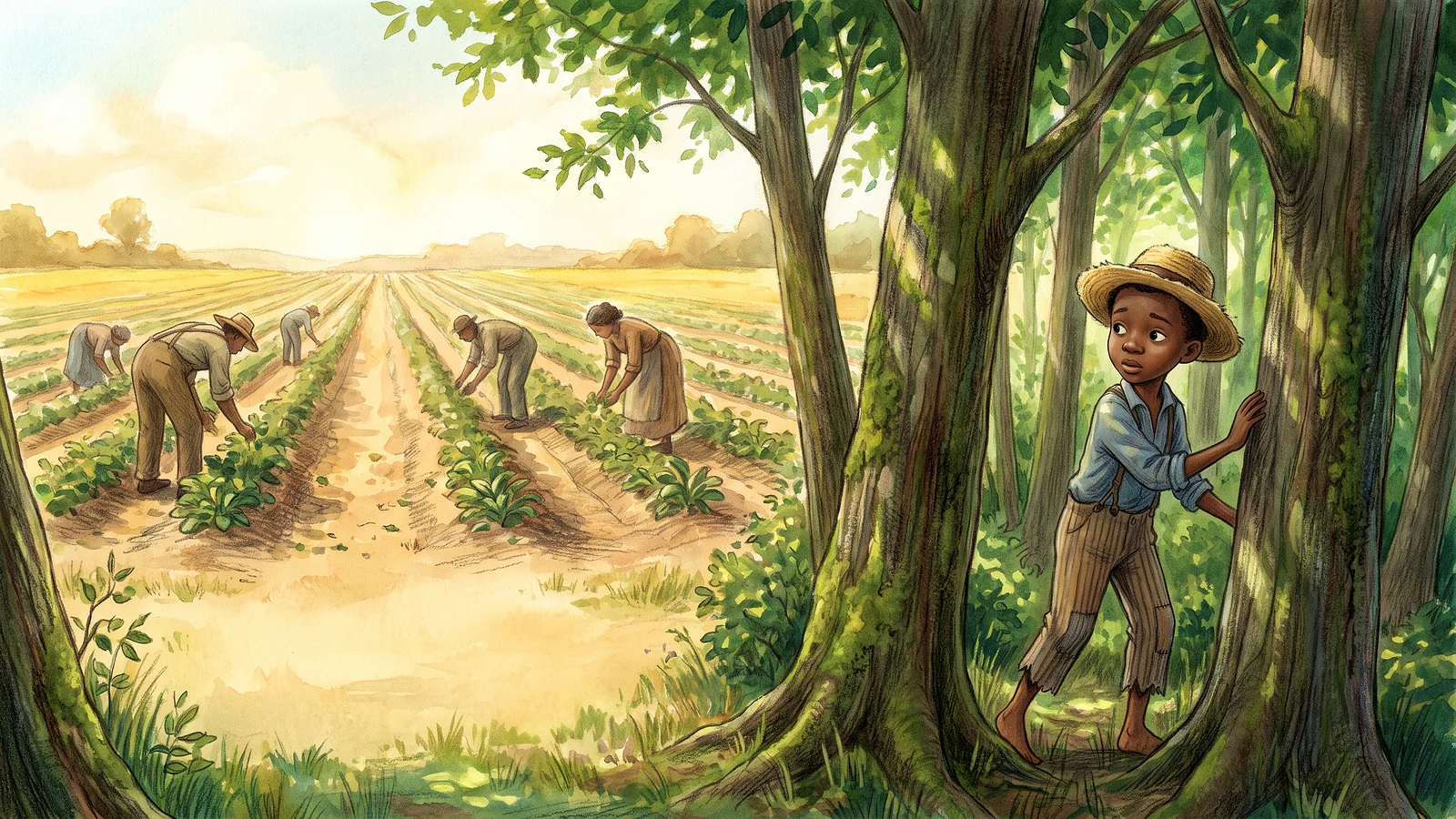
And in the woods, George kept a secret.
He had a garden hidden in there, full of sick plants. A drooping one. A yellow one. One chewed down to almost nothing. He carried them in the way another child carries home a bird with a hurt wing.
This one wanted water.
This one wanted shade.
This one wanted good black dirt.
And one by one, they stood back up.
Word got round.
Soon there were people at the gate holding plants in buckets. A fern that had given up. A rose bush down to its last three leaves.
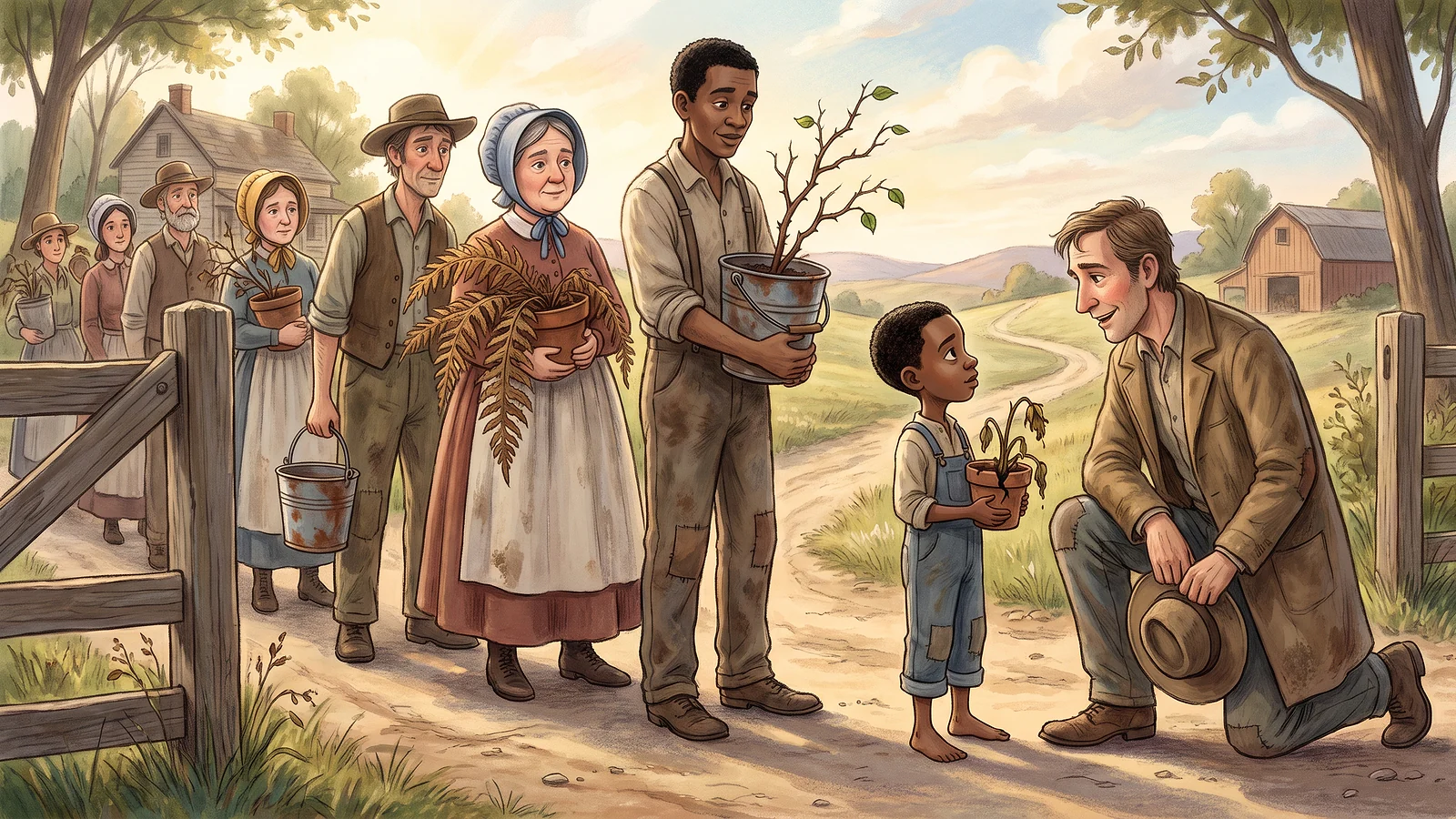
"Is the plant doctor in?" they would say.
He was still a small boy.
Now, George wanted one thing more than anything. He wanted to go to school.
He walked to the school near his home and knocked. They looked at him and said no, because he was Black.
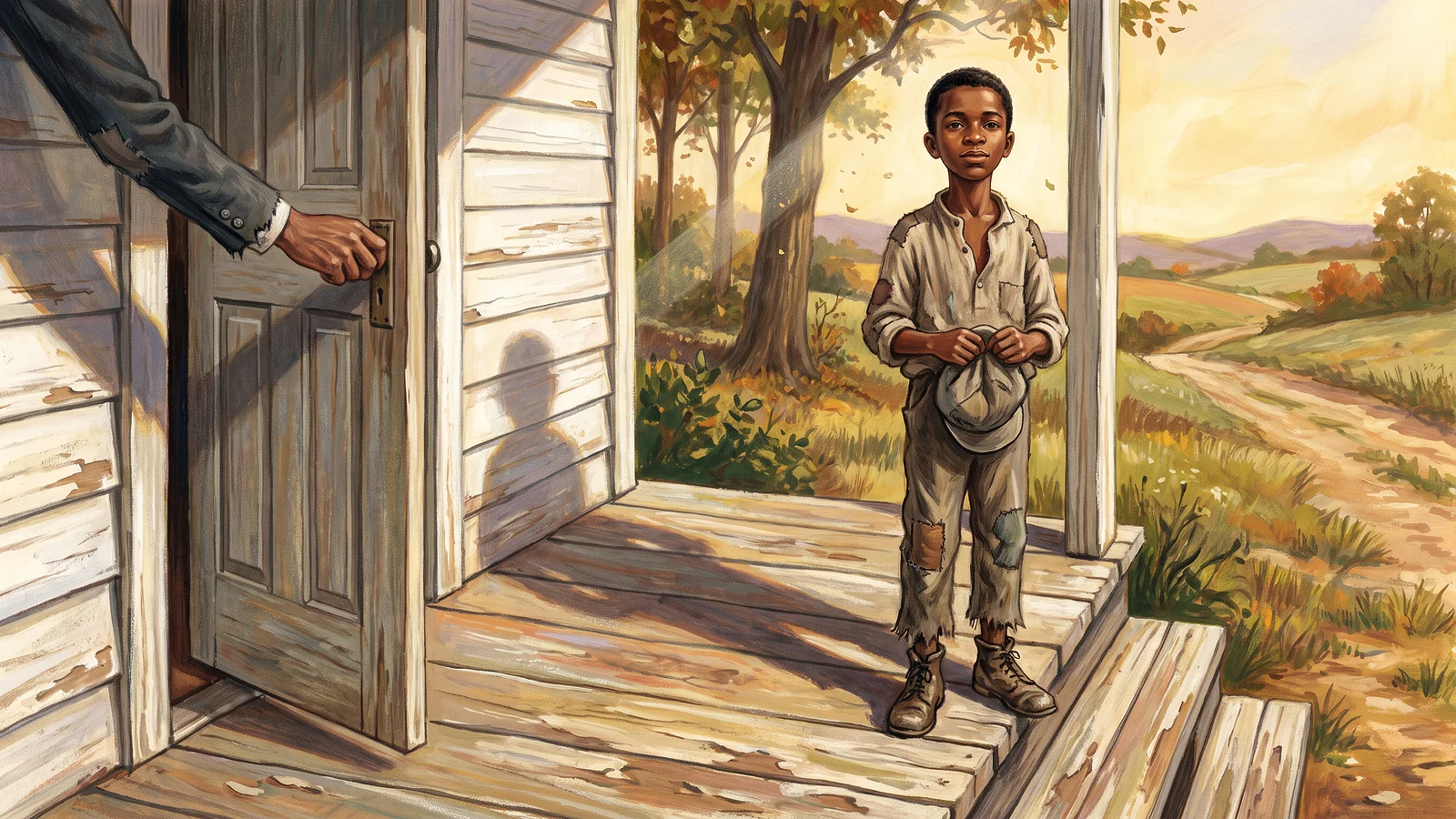
So he walked to the next town, and the next, cooking for people and washing their clothes to pay his way.
Then a college in Kansas wrote to say yes. George travelled all that way to the door. They saw his face, and turned him away too.
He kept going.
He was a grown man before a college in Iowa finally let him walk in the door. He was the only Black student in the whole place.
He studied plants, of course.
And when he finished, they did not want him to go.
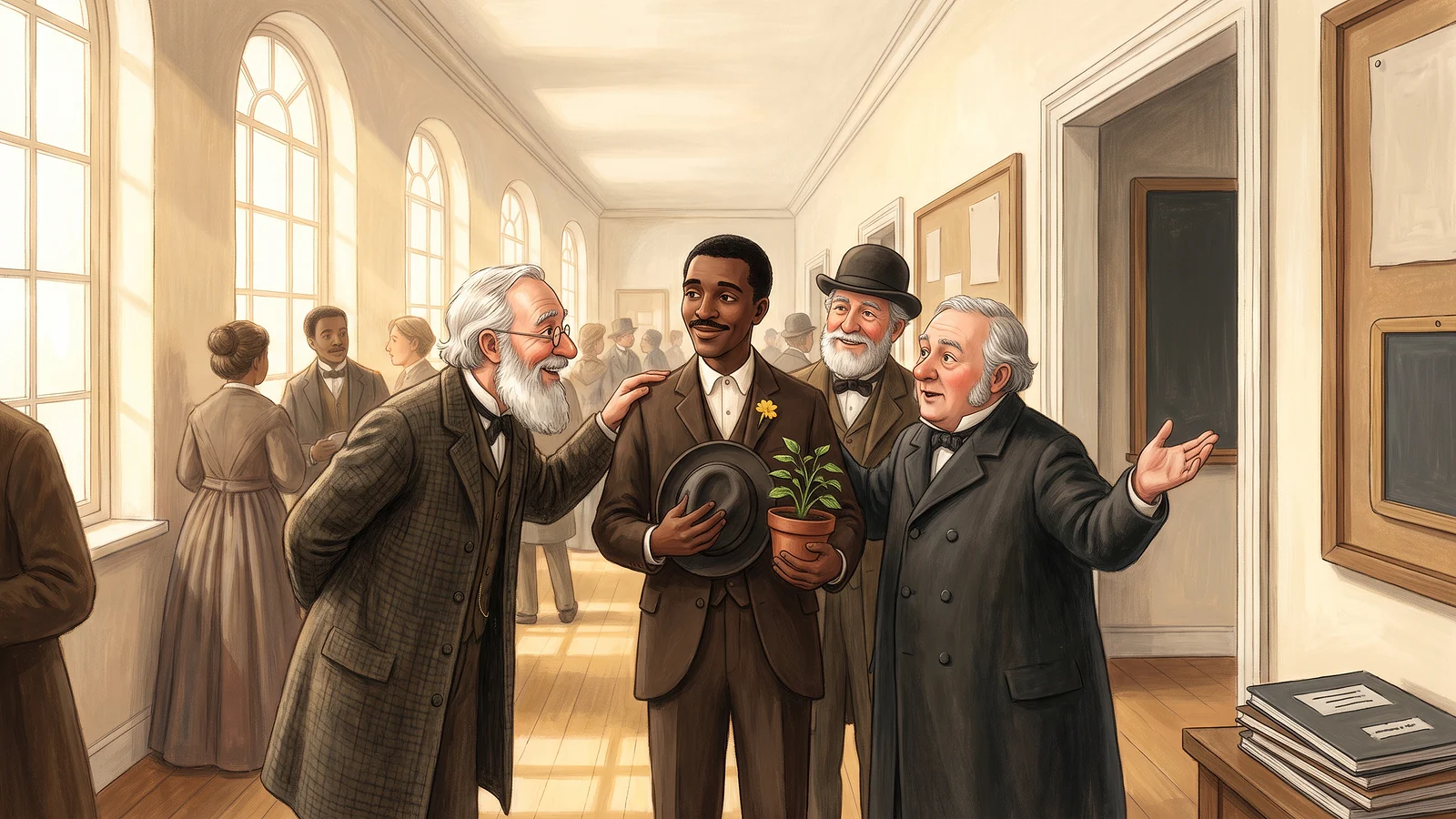
"Stay," they said. "Teach."
So the boy the schools had turned away stood up at the front of a classroom. He was that college's first Black teacher.
Then a letter came.
It was from a man named Booker T. Washington, at a school in Alabama called Tuskegee.
I cannot offer you money, the letter said. I cannot offer you fame. What I can offer you is work. Hard, hard work. Your laboratory will have to be in your head.
George went.
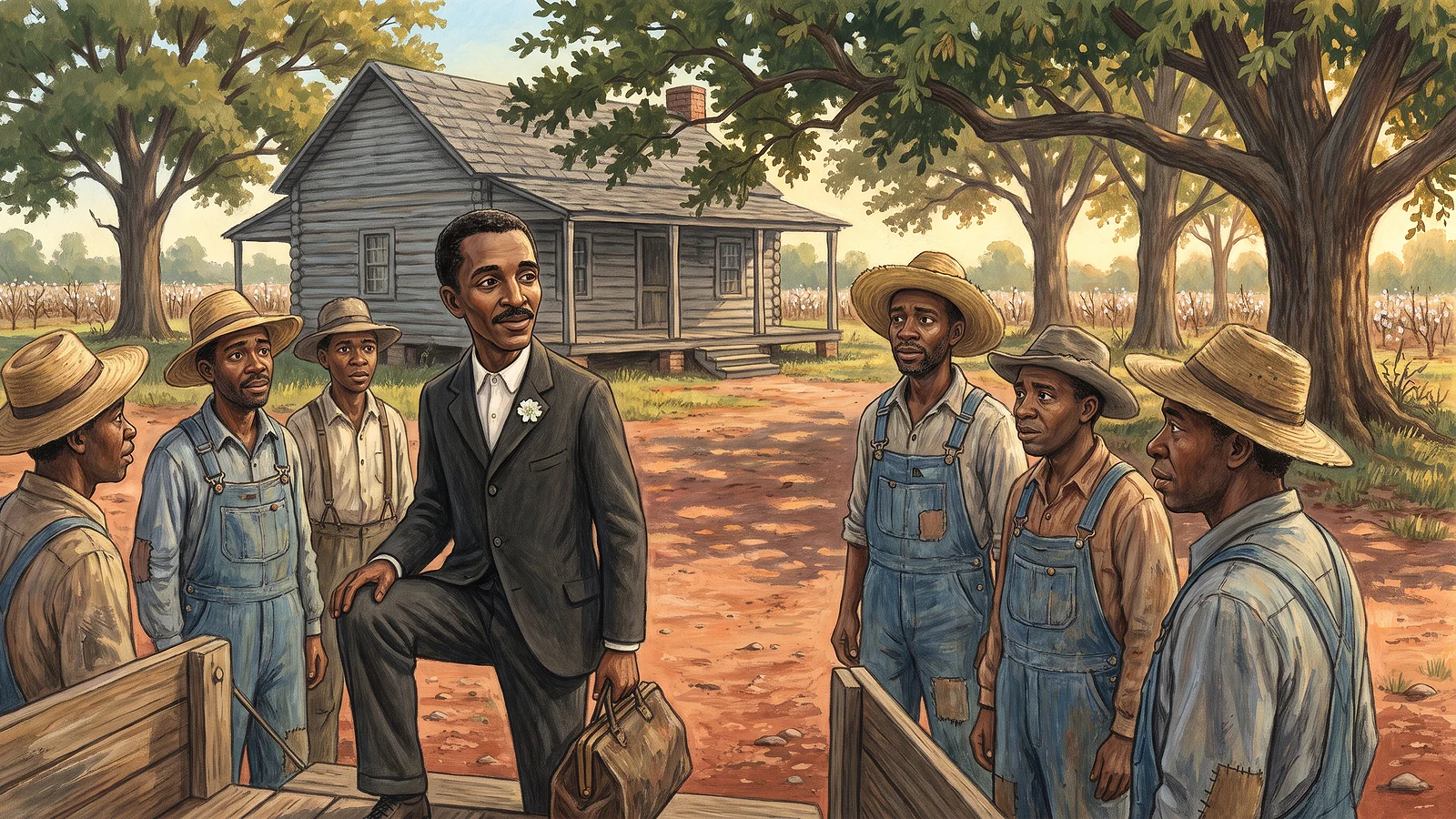
He found farmers in trouble. Think of the ground as a dinner plate. Cotton eats, and eats, and never puts anything back. Those fields had been eating cotton for years, and the plates were licked clean.
The soil was hungry.
So George told them to stop. For one year, plant something else. Plant peanuts. Plant cowpeas, which are a kind of bean. Beans put back into the ground the very thing cotton takes out.
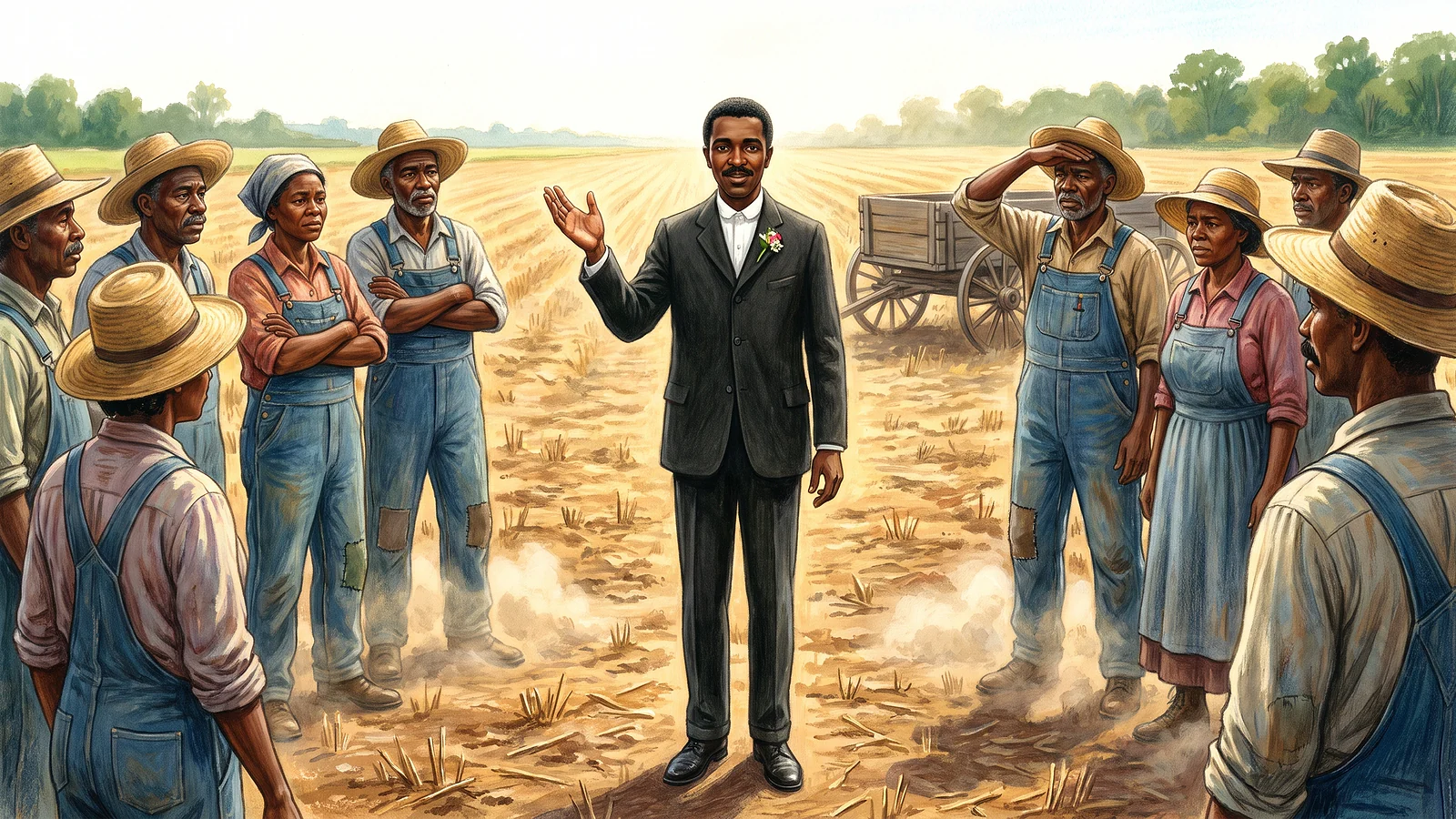
And plant sweet potatoes too, he said. Not for the soil. For your children, so there is something to eat.
The farmers stared at him.
"Peanuts?" said one. "Nobody ever got rich on peanuts."
One of them tried it anyway.
The next year, that man's cotton came up green and strong, and his neighbours climbed the fence to look.
But peanuts fetched hardly any money, and a farmer has to sell what he grows. That is how he buys food and shoes.
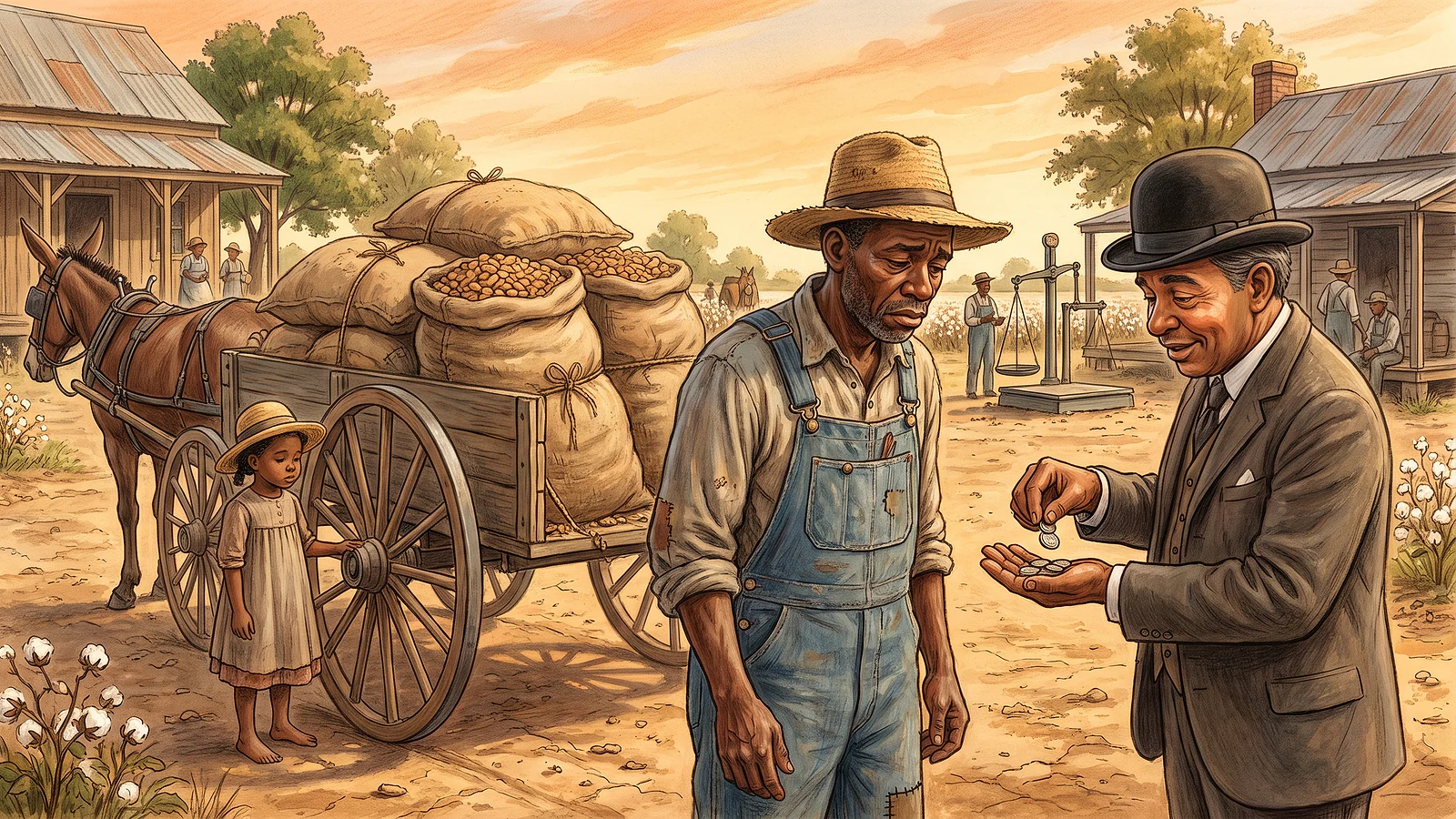
So George went into his laboratory and did what he had done as a boy in the woods. He looked. Properly.
And then he started making lists.
Soap. Out of a peanut.
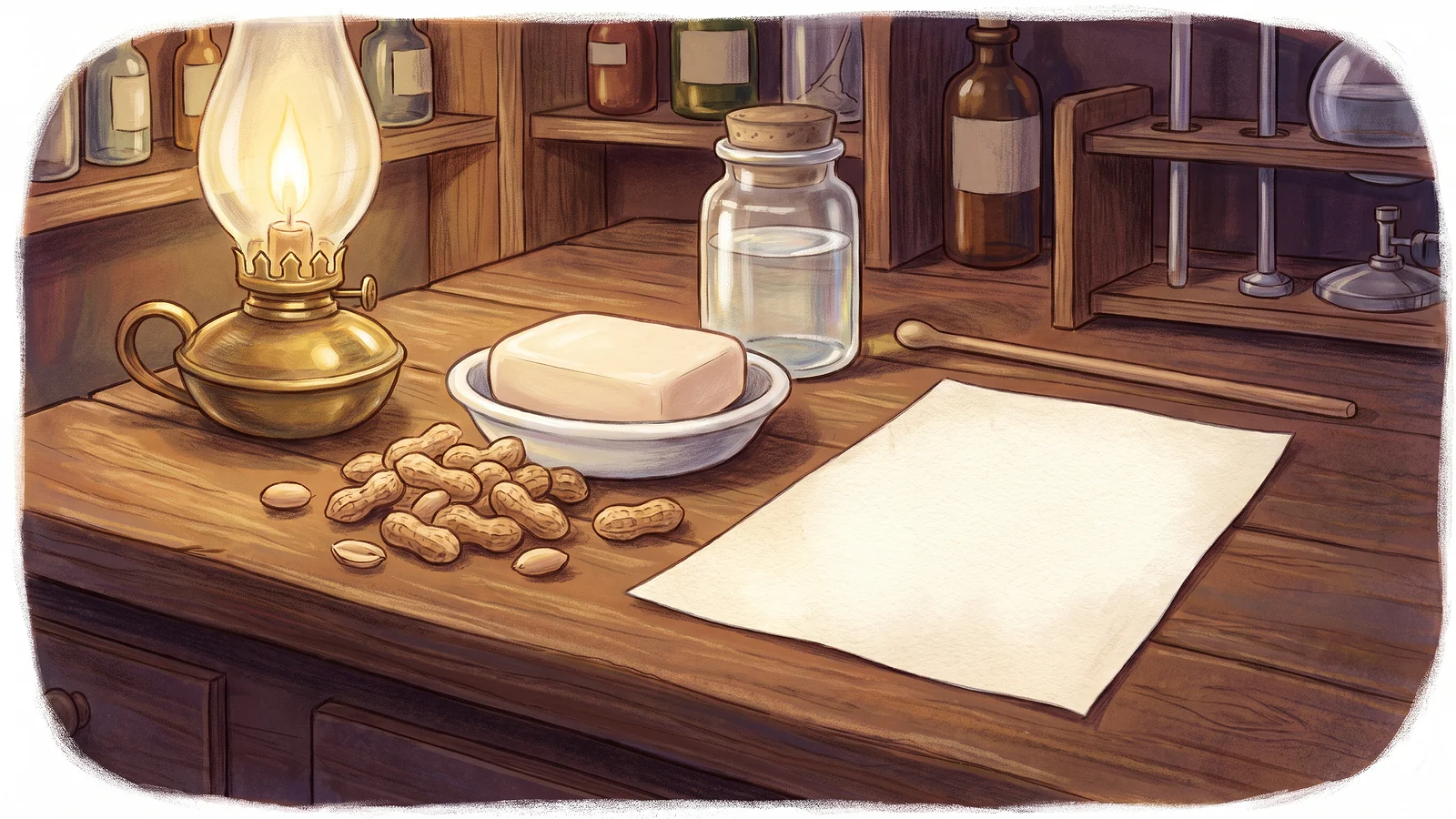
Paper. Out of a peanut.
Paint, and flour, and cooking oil — out of a peanut.
He kept going until the lists ran to hundreds of things.
Somewhere in Alabama, a man washed his hands with a peanut and thought nothing of it.
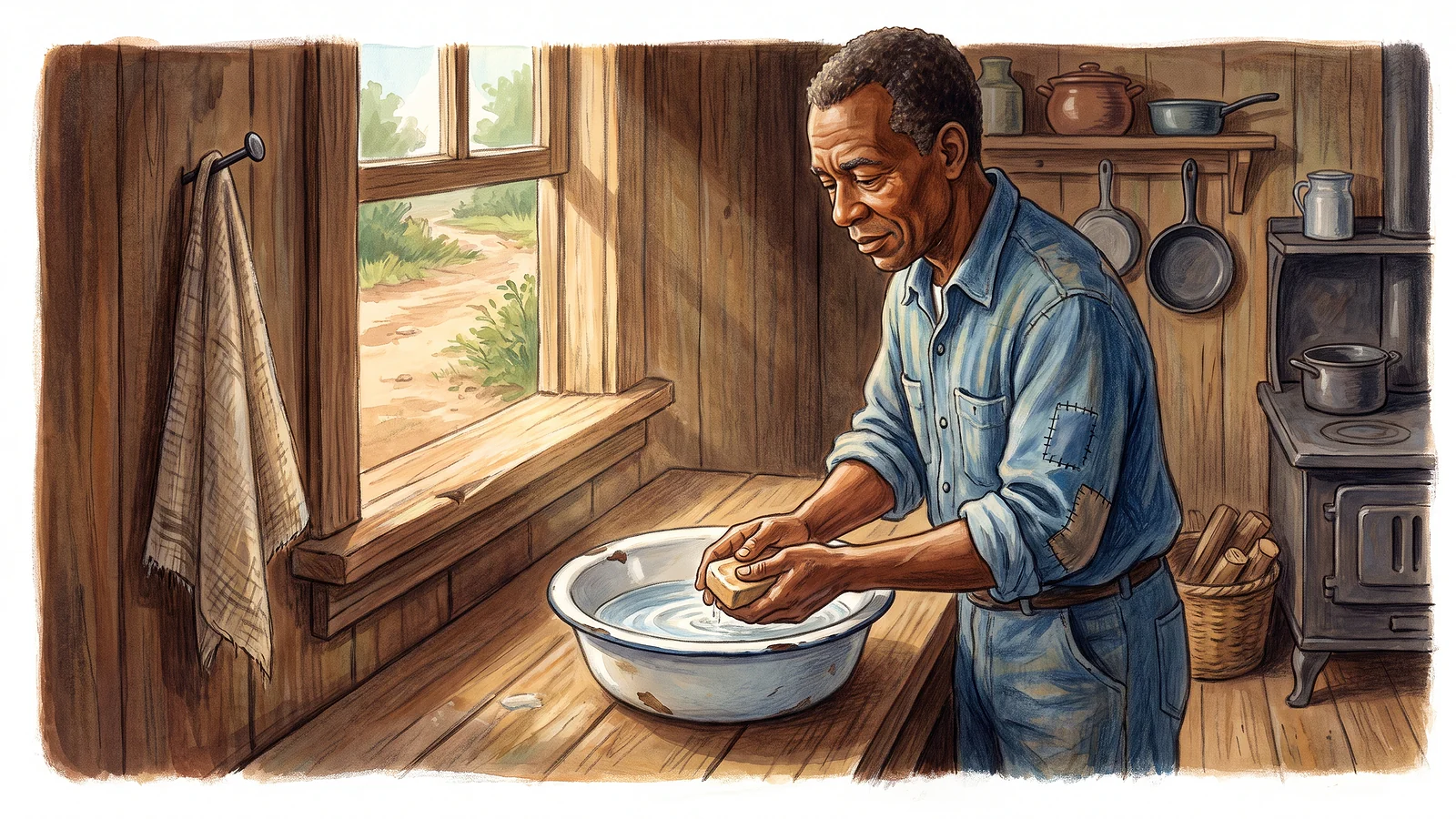
He could have sold what he knew and become rich. He did not. He wrote it in little books and gave them away, free, to any farmer who asked.
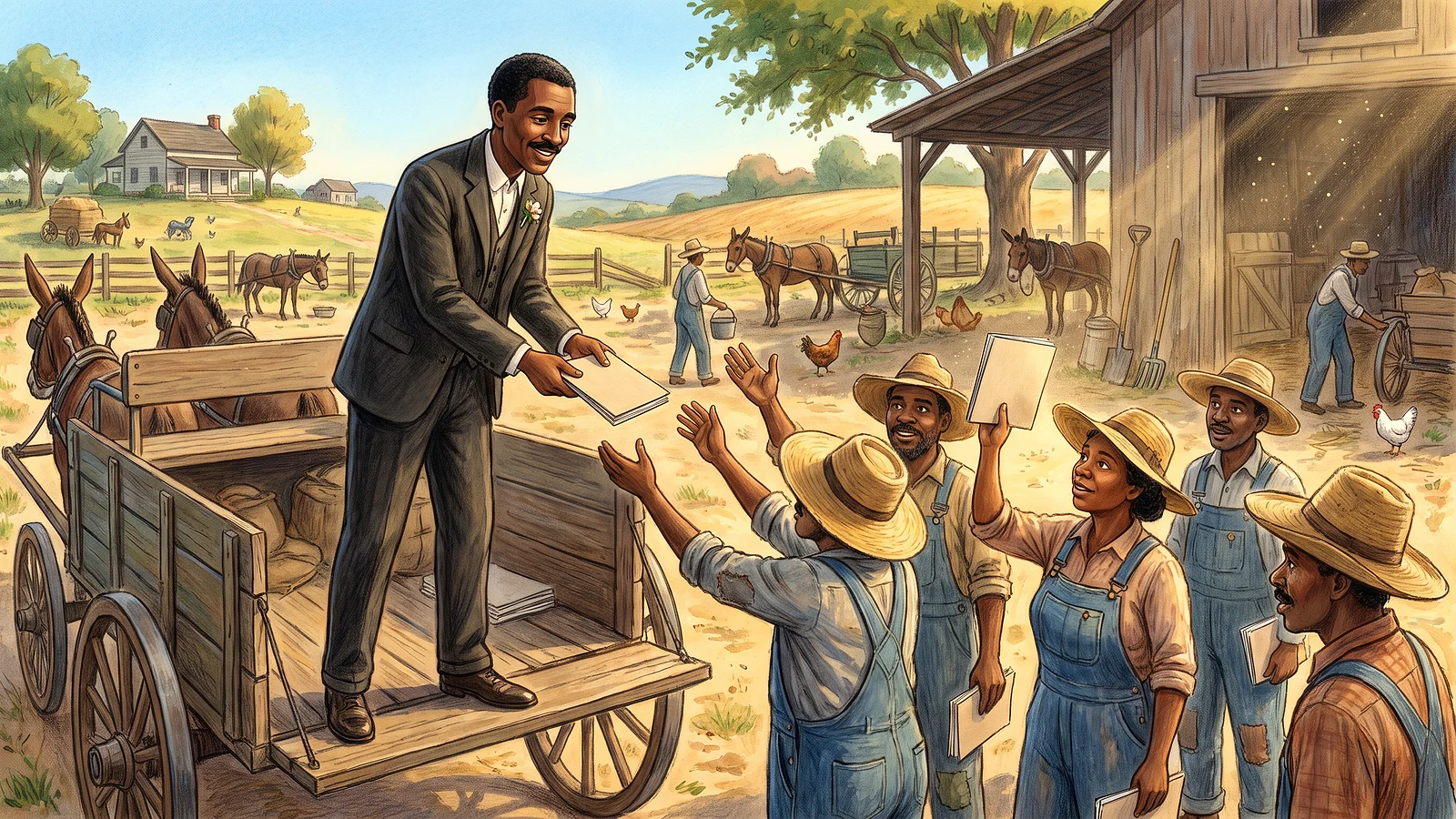
He said the work was not his to sell. He said it had been given to him.
Somebody once stole that baby.
He never found his mother. He never even knew what day he was born.
And he grew up and gave everything he had away.