
The Lady with the Lamp
A true story about a woman who changed the world by counting.
Who is in this story
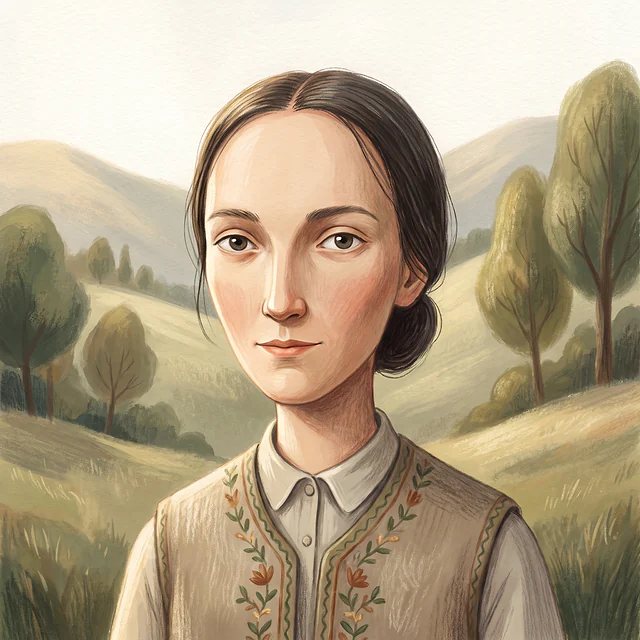
Florence
She wanted to be a nurse when nobody thought a lady should be.
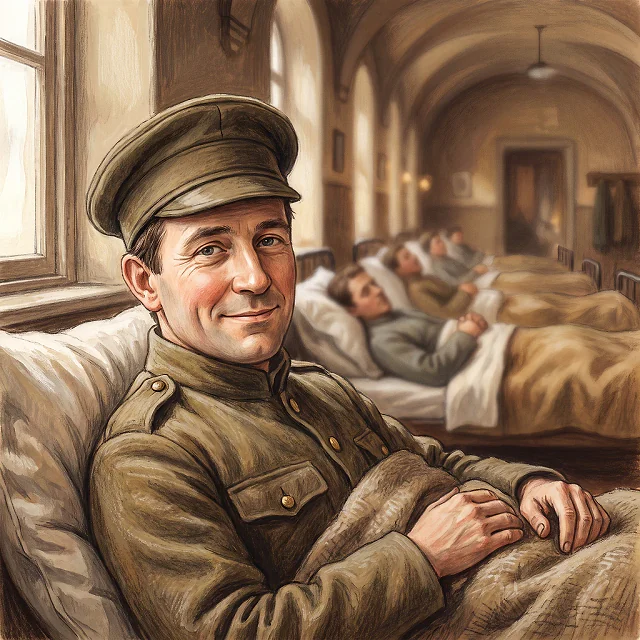
The soldiers
They watched for her light coming down the ward at night.
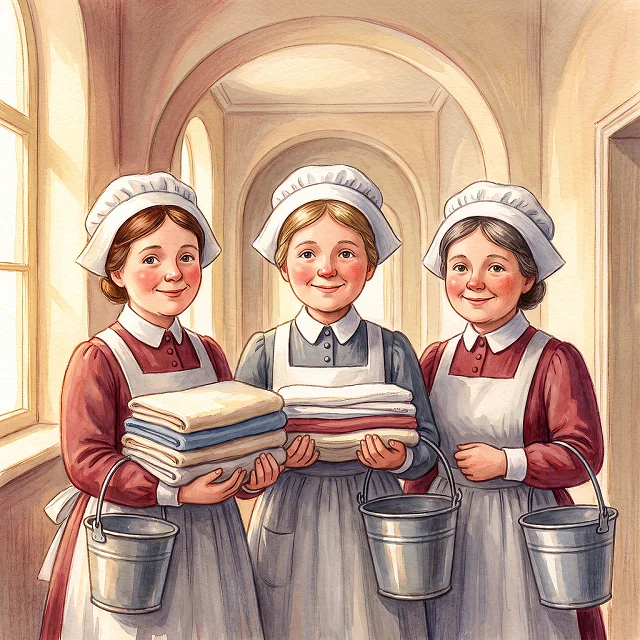
Her nurses
They scrubbed and cooked and carried clean sheets, ward after ward.
Read the rest of this story
Start free and your children read it under your account, with the worksheets and the films.
The Lady with the Lamp
Here is a true story about a woman who changed the world by counting.
She was born in Italy, in a city called Florence, and her parents liked the city so much that they named her after it. Florence.
Her name was Florence Nightingale, and her family was rich. Very rich. A girl in a family like that, at that time, was expected to wear beautiful dresses, go to parties, and marry someone suitable. That was the whole plan.
Florence did not want the plan.
What Florence wanted was to be a nurse. She told her family so. They were horrified. In those days hospitals were dreadful places, and nursing was not thought a proper job for a lady. Her mother wept. Her father refused.
Florence waited. She read every report about hospitals she could find. She taught herself. She argued. And after years and years of it, her family finally gave in, and she went away to be trained.
Then came the war.
British soldiers were fighting far away, near the Black Sea, and the news that came home was terrible. Not because of the battles. Because of what happened after the battles.
The wounded men were carried to an army hospital at a place called Scutari. And there, in that hospital, they were dying in numbers nobody could explain.
Florence was asked to go and take nurses with her. She went.
What she found was worse than the reports. The hospital was a huge cold building, filthy from top to bottom. There were not enough beds, so men lay on the floor in rows. There was no clean water to drink. There was almost no soap. There was hardly any decent food. The drains underneath the building were blocked, and the air in the wards was thick and foul.
Men arrived with a wound in the arm and died weeks later of a sickness they had caught inside.
Nobody at home knew yet. The letters kept coming for men who could not read them any more.
So Florence and her nurses started work. Not fine work. Dirty work. They scrubbed. They opened windows to let air move through. They washed the sheets, and when there were not enough sheets, they got more. They cooked proper food. They emptied and cleaned. They kept going, ward after ward, week after week.
And at night, when the nurses had gone to rest, Florence took a lamp and walked. Down the long dark rooms, checking on the men, stopping to speak to them.
Thousands of soldiers were in that hospital. They watched for her light coming.
"She's coming," one of them would say. "Look. There's the light."
They called her the Lady with the Lamp, and the name went home to England ahead of her.
The lamp is what everybody remembers. Almost nobody remembers the notebook.
Because all the while Florence was scrubbing and nursing, she was also writing things down.
She wrote down how many men came in. She wrote down how many died. And, this is the part that mattered, she wrote down what they died of. Wounds, or sickness? She kept her records carefully, month after month, until she had something nobody had ever had before: proof.
And still the men died.
Florence could not understand it. She was doing everything she knew how to do, and it was not enough.
Then, in the spring, men came from London whose only job was drains. They dug up the sewers underneath the hospital and washed them out. They cut holes in the walls to let the air move.
And the dying slowed. Not a little. Enormously.
Florence had scrubbed the floors. The thing that was killing the men had been underneath the floors, where nobody had thought to look.
The numbers said something shocking. Far more soldiers were dying of disease caught in the hospital than were dying of their wounds. The dirt was killing more men than the war.
When Florence came home, she did not simply tell people this. She knew that a page of numbers makes most people's eyes slide off it. So she drew them.
She did not have to invent a new kind of picture. She took an old one and made it tell the truth. She drew a wheel, cut into coloured slices, and made each slice as big as the number of men it stood for.
You could look at that picture for three seconds and see it. The huge shape was disease. The small shape was wounds.
She showed it to generals.
"Numbers," said one of them. "You cannot run an army on numbers."
Florence did not argue. She simply turned the picture round so he could see it.
She showed it to the men who wrote the laws. She had already sat with the Queen and told her; now she could show her.
Nothing happened for a long time. Then it did. Army hospitals were rebuilt and cleaned. Rules were written about air and water and drains. Later, Florence started a school in London to train nurses properly. Nursing became a real job you trained for, and were proud of.
She lived to be ninety years old.
By then there were nurses in every city, trained in her school. There were clean wards with the windows open. And nobody thought that strange at all.
She is remembered for the lamp. But the lamp only lit one room at a time.
The counting lit all of them.