The Boy Who Made an Alphabet
The alphabet blind people read all over the world was invented by a boy who was fifteen.
The Boy Who Made an Alphabet
Who is in this story
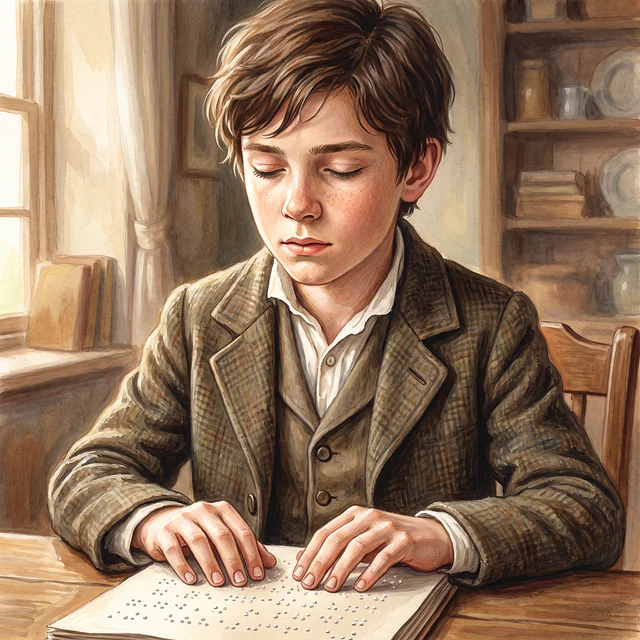
Louis Braille
He could not read the books, so he made a better kind.
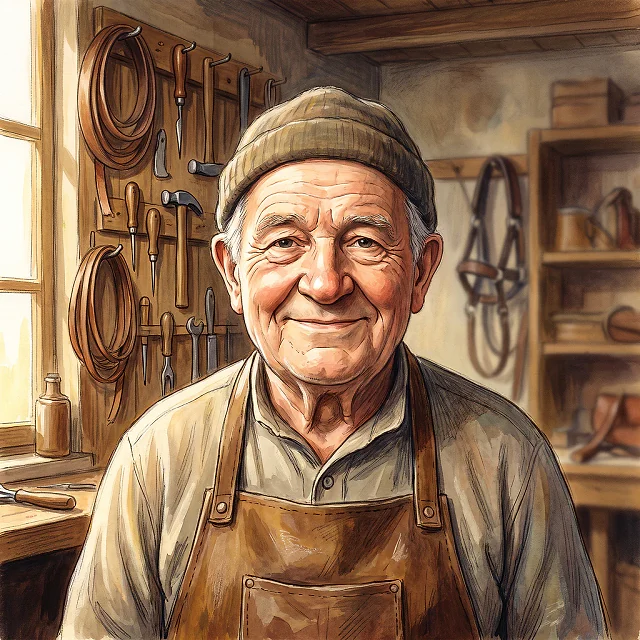
His father
A harness maker, whose workshop Louis loved.
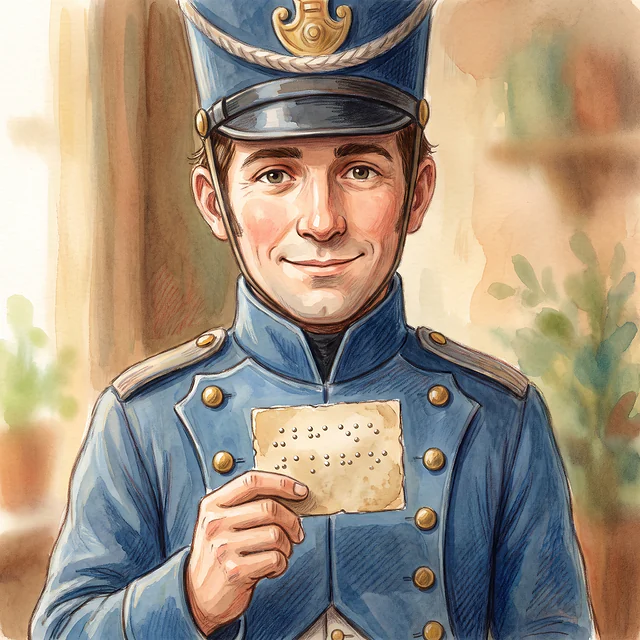
Charles Barbier
A soldier with a code for reading in the dark.
Did you catch it?
1 of 5How old was Louis when he finished his alphabet?
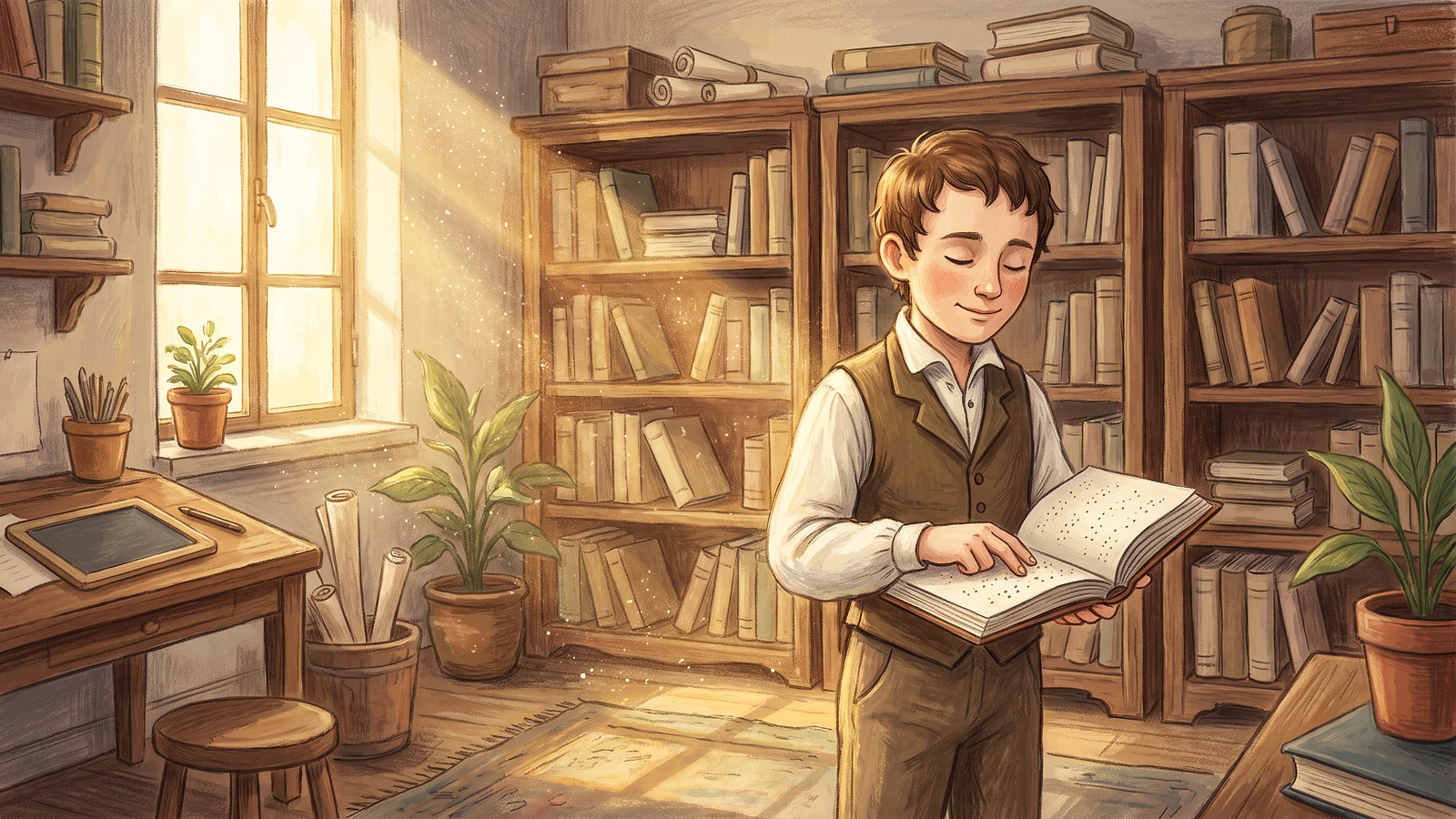
The dots that blind people read, all over the world, were made up by a boy. He was fifteen.
His name was Louis Braille, and he lived in a small village in France a long time ago. His father made harnesses and saddles out of leather. Louis loved that workshop, the smell of it, and the tools hanging in rows on the wall.
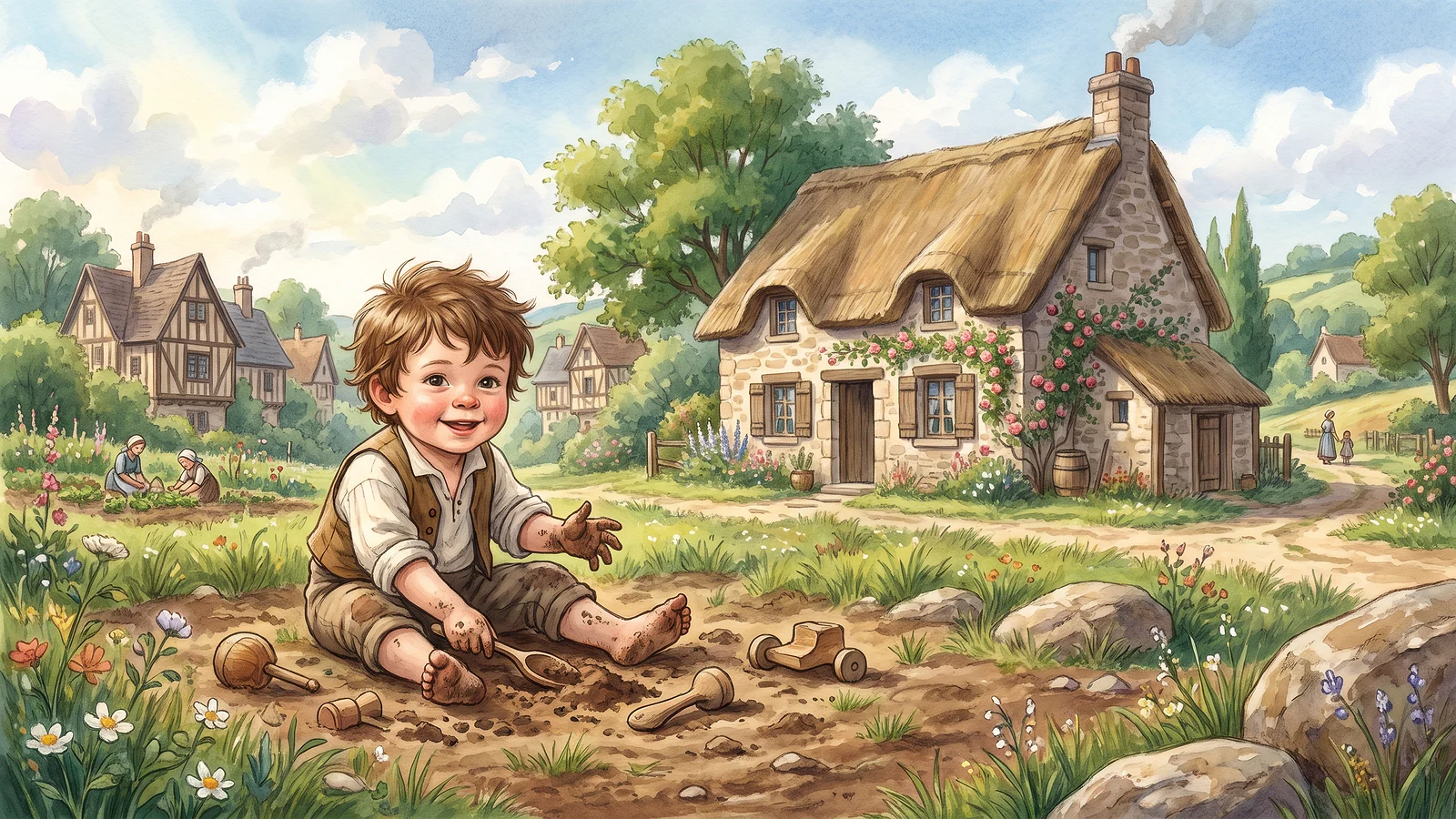
He was three years old when the accident happened. He was playing with one of the sharp tools, and it slipped, and it hurt his eye badly. The eye became infected. Then the infection spread to his other eye.
By the time he was five, Louis could not see anything at all.
Nobody could fix it. There was no fixing it then. His mother and father kept him close, and the workshop went on smelling of leather, and Louis grew up in the dark.
Here is the thing about Louis, though. He was clever, and he was stubborn, and his village decided he should still go to school. He sat in the classroom and listened, and he remembered everything he heard. He was top of his class.
But he could not read a single word. And that was the thing he wanted most.
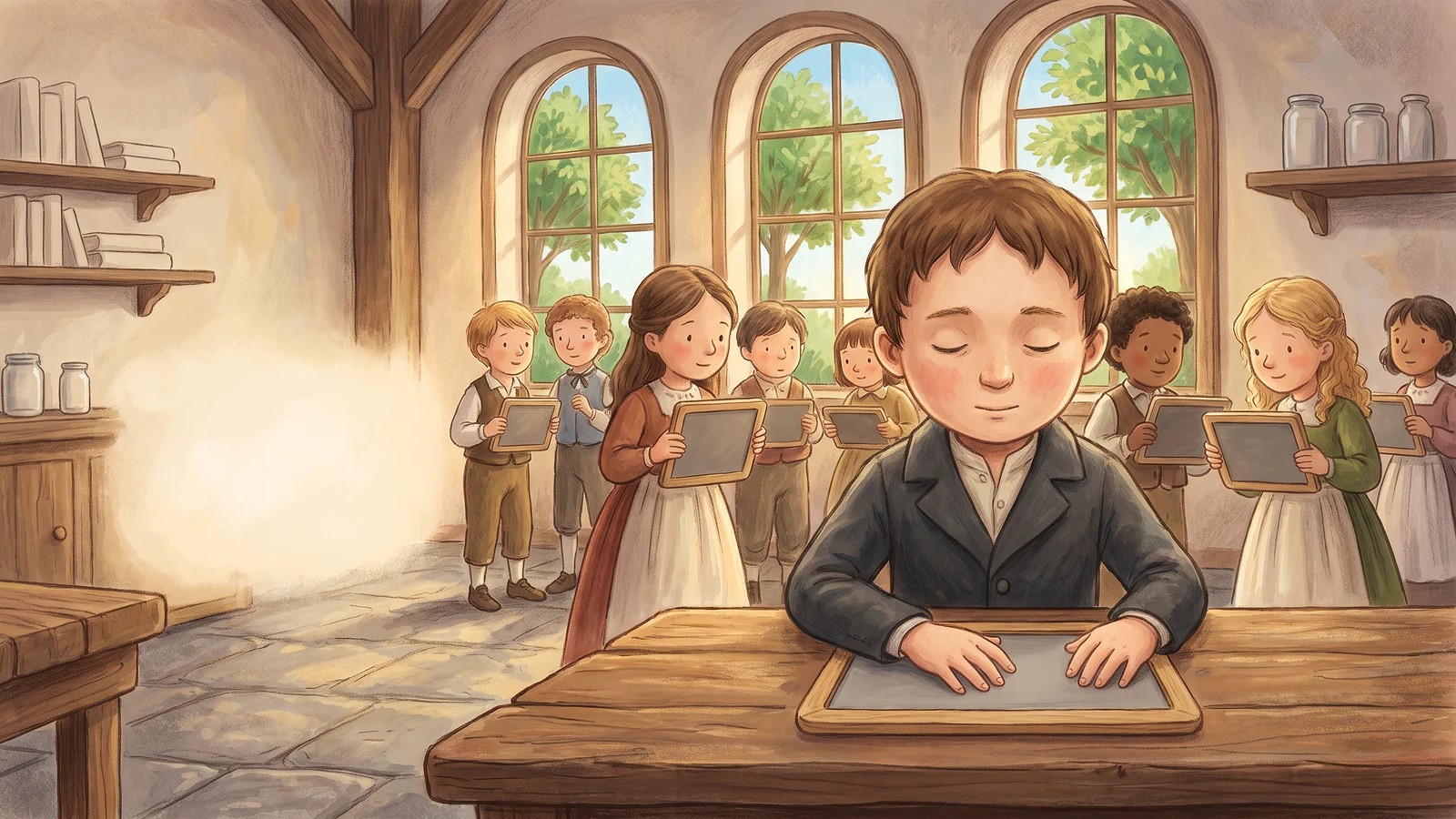
When he was ten, Louis went away to a special school in Paris for blind children. They had books there. Hardly any, you could count them on your fingers, but they had books.
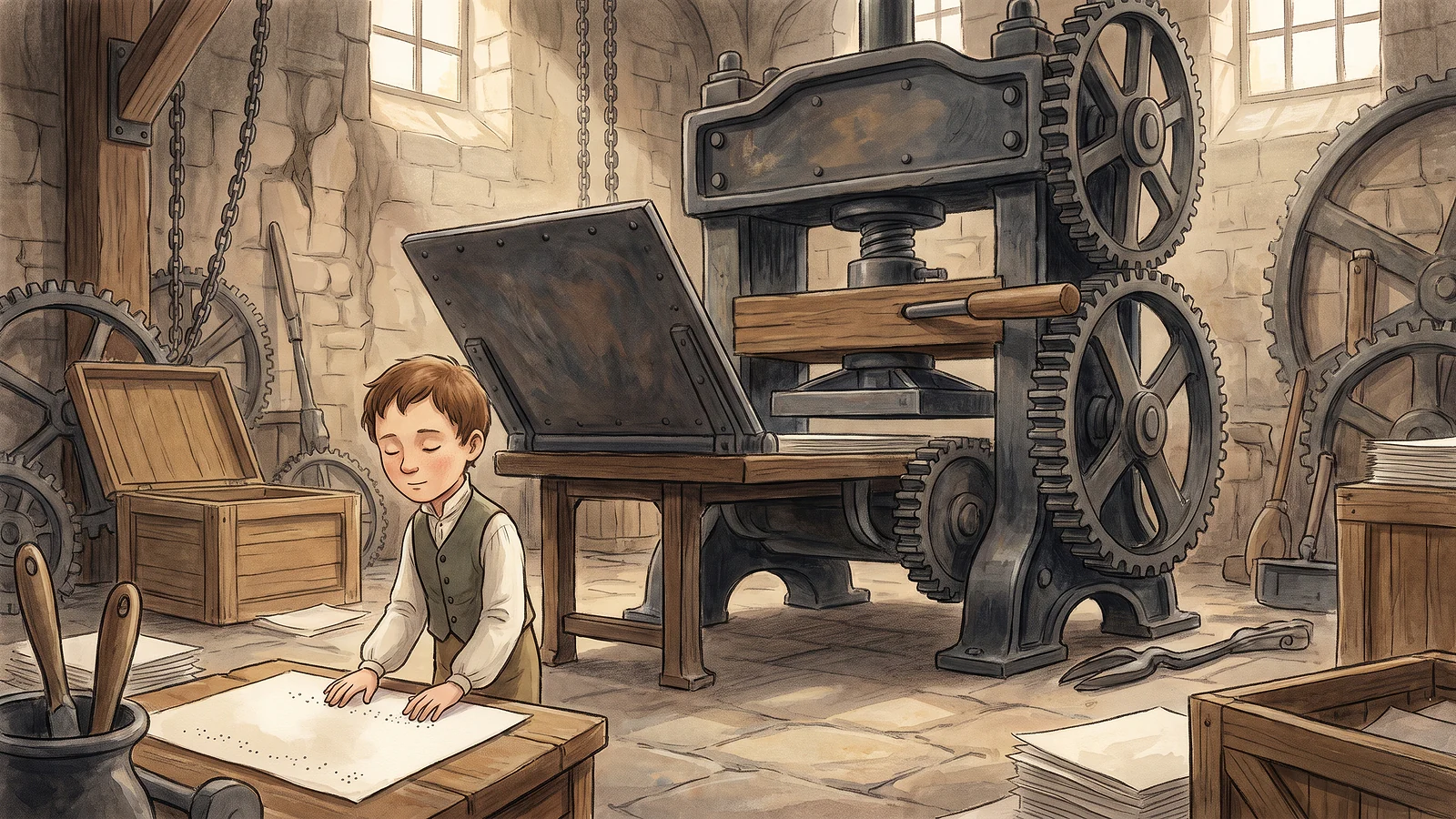
Louis put his fingers on a page and felt enormous letters, pressed up out of thick paper.
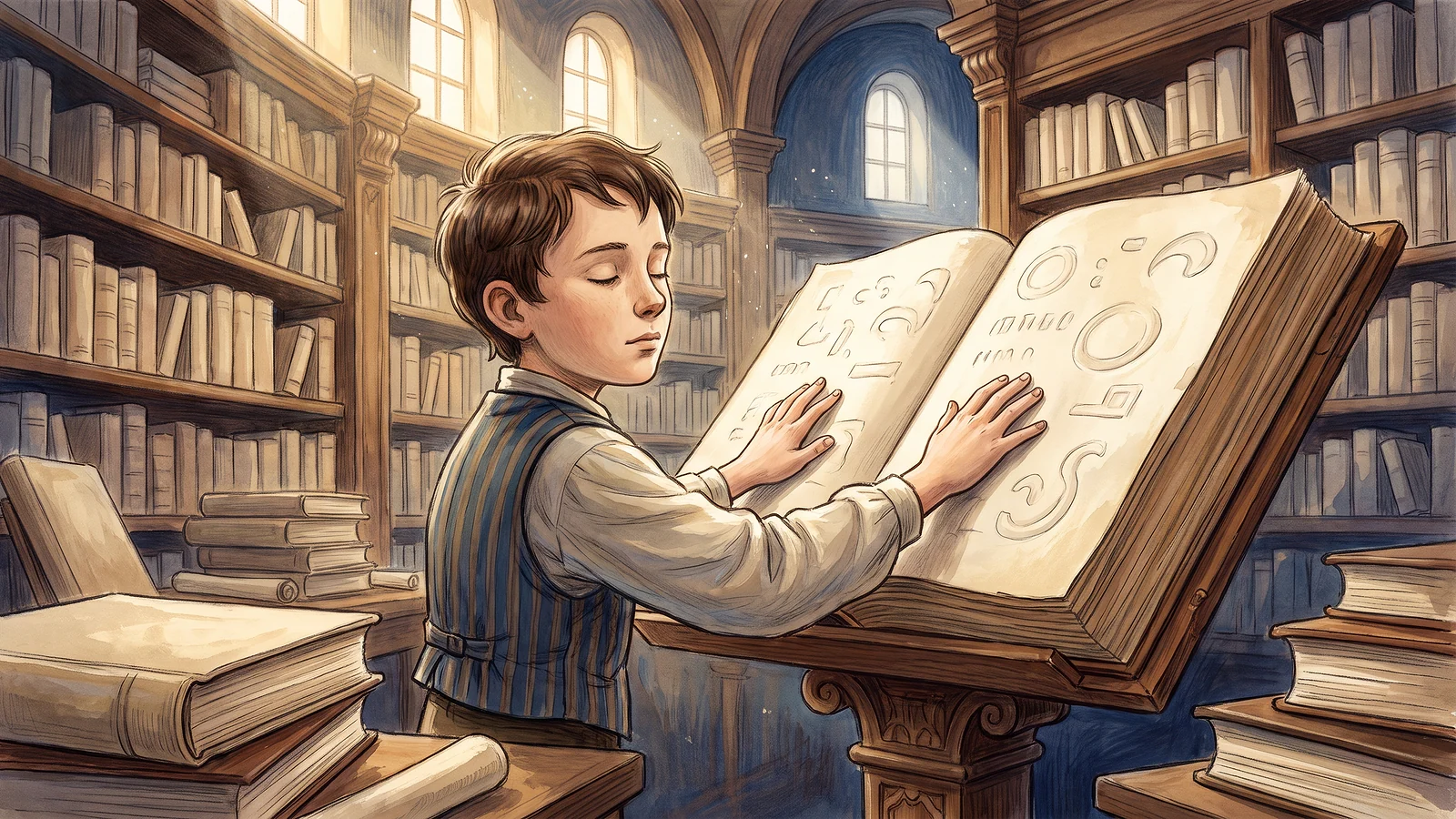
He could read them. Barely.
Each letter was as big as his whole finger. A single book was so heavy a boy could hardly lift it. By the time your finger reached the end of a sentence, you had forgotten how the sentence began.
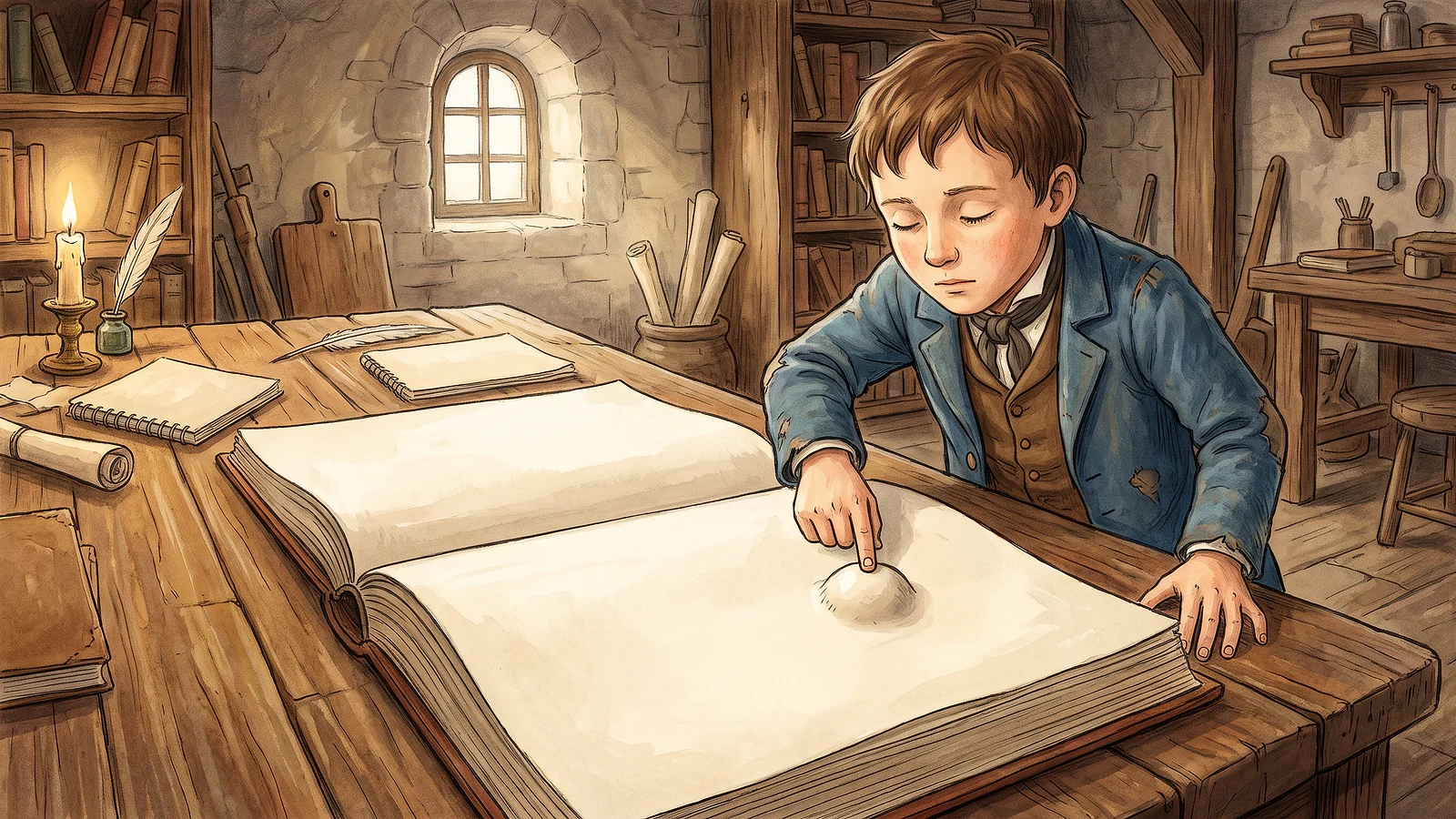
"Start again," the teacher would say. And you would start the sentence again.
And there was something worse. You could read those letters, but you could not write them. Making them needed a printing press. So a blind child could receive words, but could never send any.
Then one day a soldier came to the school.
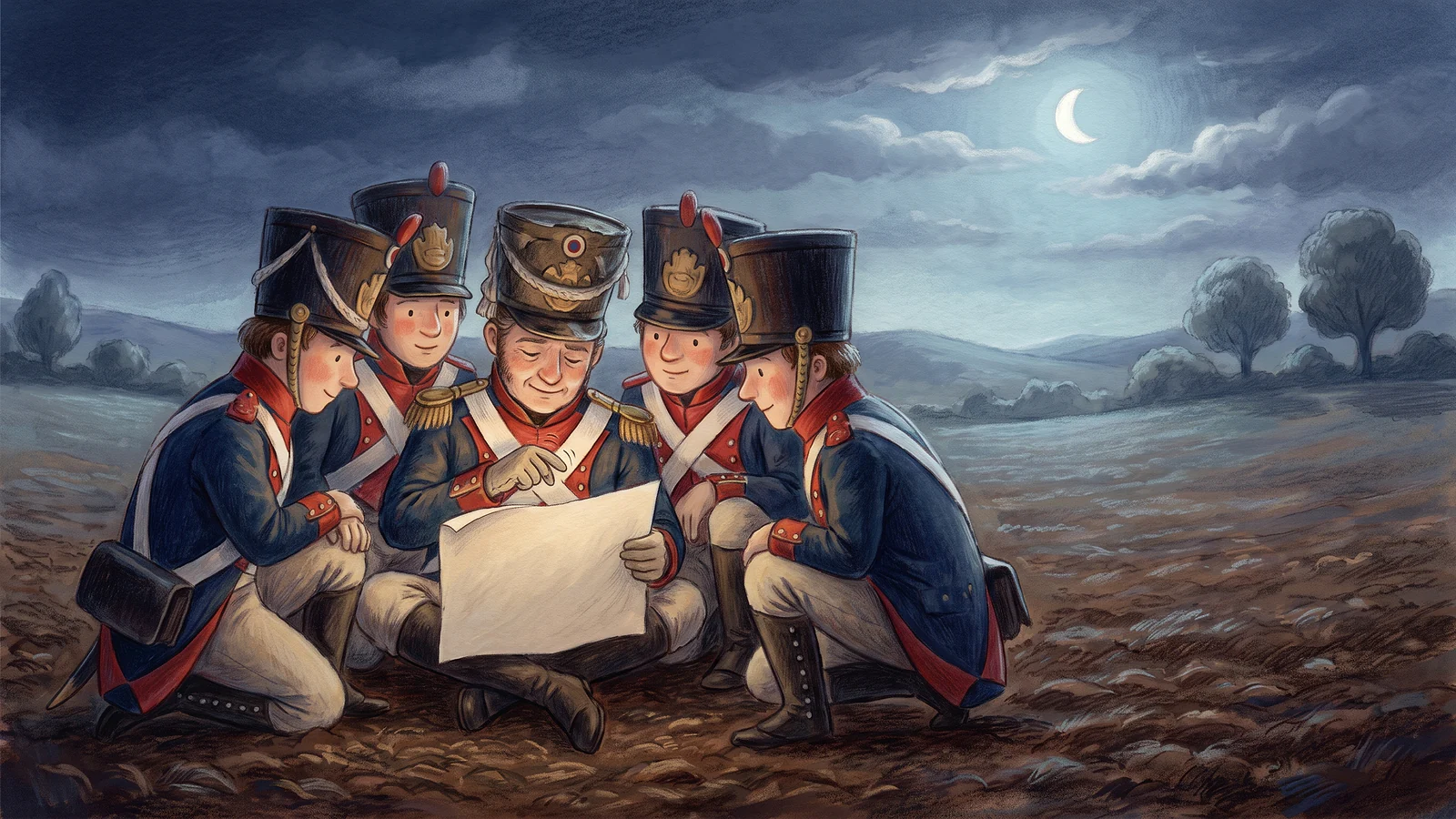
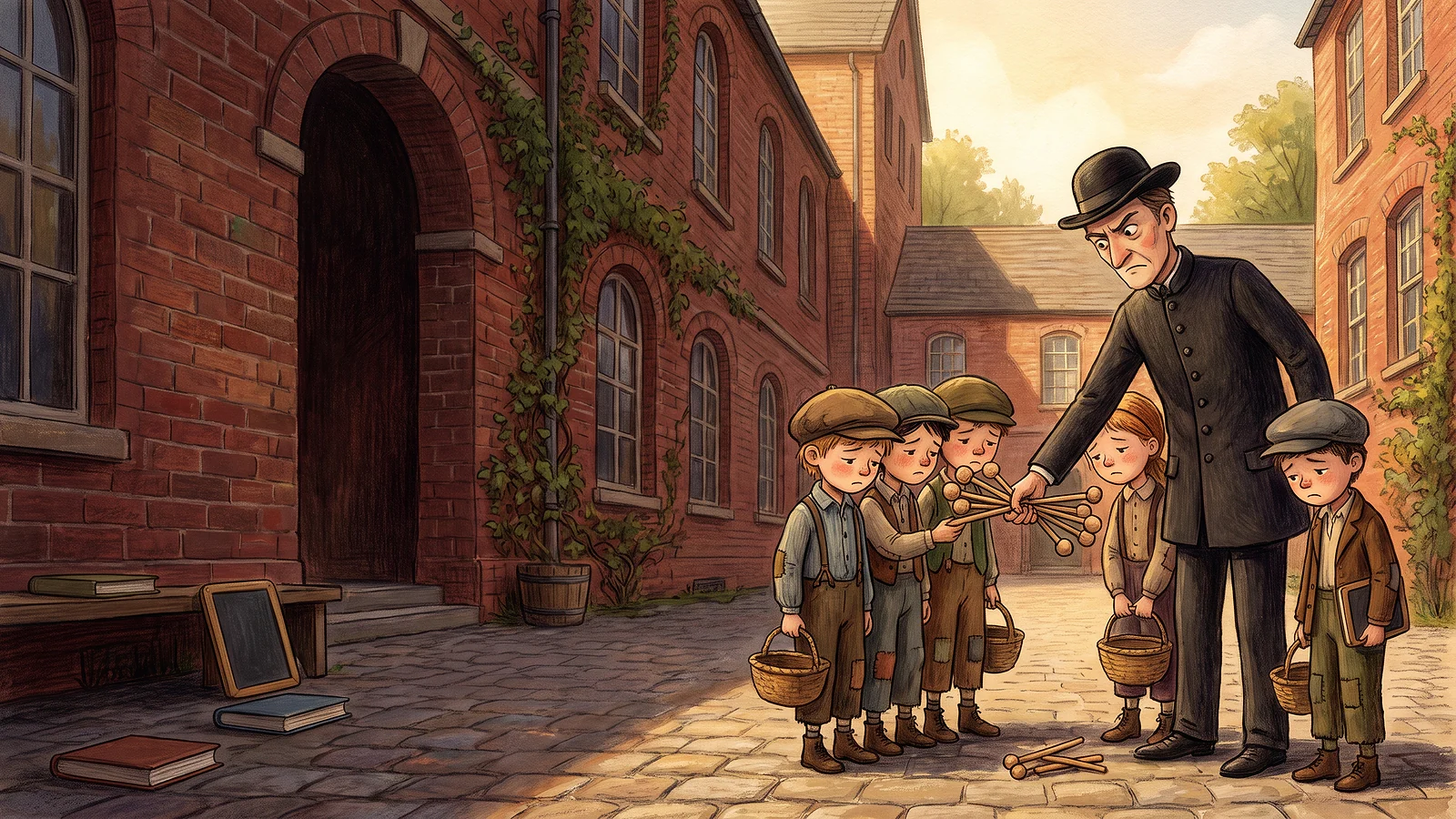
His name was Charles Barbier. He was an old soldier, and he had made a code out of raised dots. He said he had made it so that soldiers could read a message at night without lighting a lamp that would show the enemy where they were.
The children tried it. It was clumsy.
Each of Barbier's shapes used twelve dots. That is too many to feel under one fingertip at once. And it spelled sounds instead of letters, so you could not spell a name with it, or write a number, or put in a full stop.
But Louis sat very still when he felt those dots.
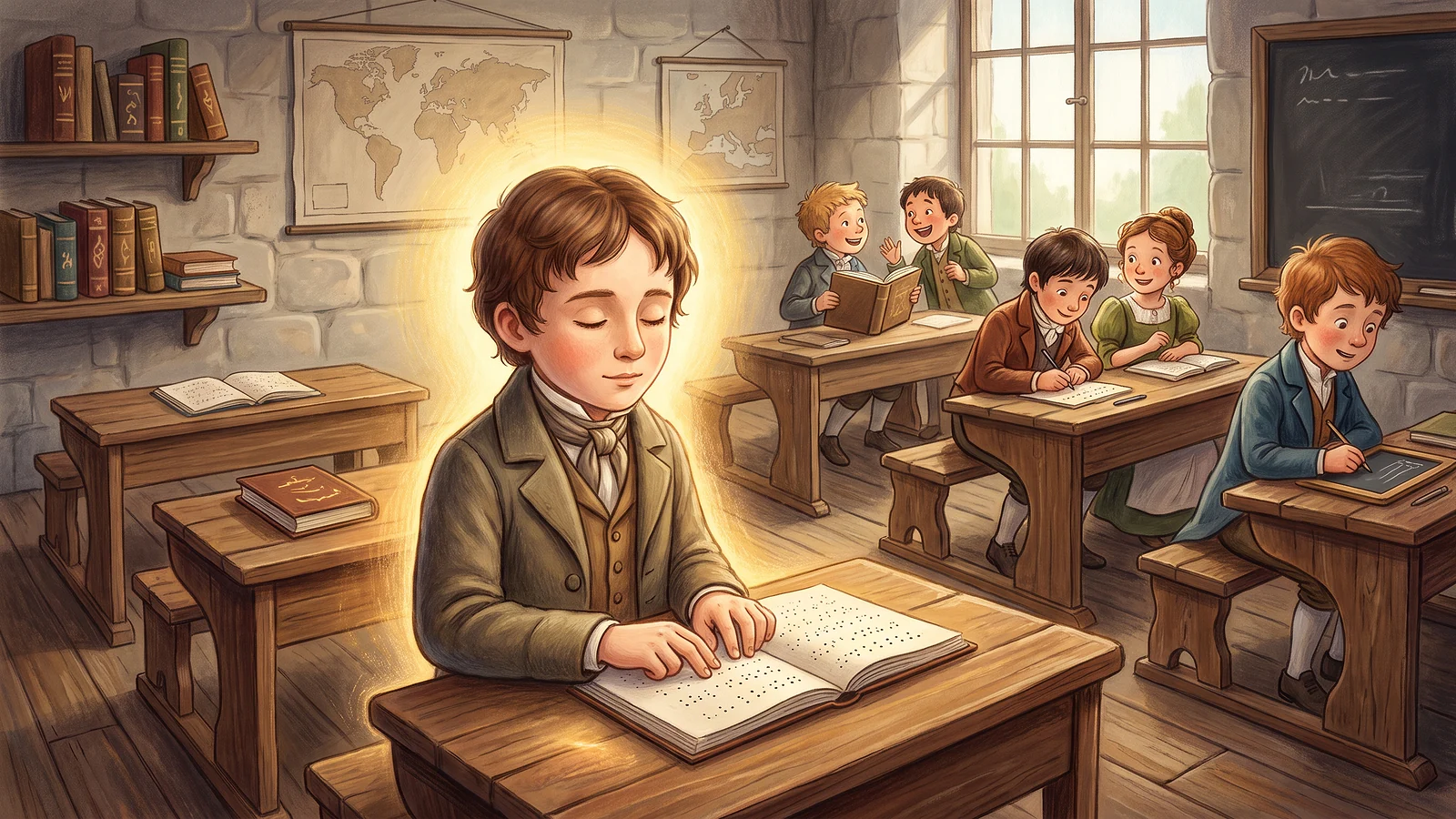
Because he had understood something the soldier had not. The dots did not have to look like anything. Letters made of dots were free. They could be any shape that fingers were good at feeling.
Louis was twelve years old, and he started work.
He tried it one way. He tried it another. For three years he pushed dots into paper with a blunt tool and read them back with his fingertips.
And he got it down to six.
Six dots, in two little columns of three. Small enough to sit under one fingertip without moving. Enough different arrangements for every letter, every number, and the punctuation too.
Best of all, a blind person could make those dots themselves, with a simple tool, on ordinary paper.
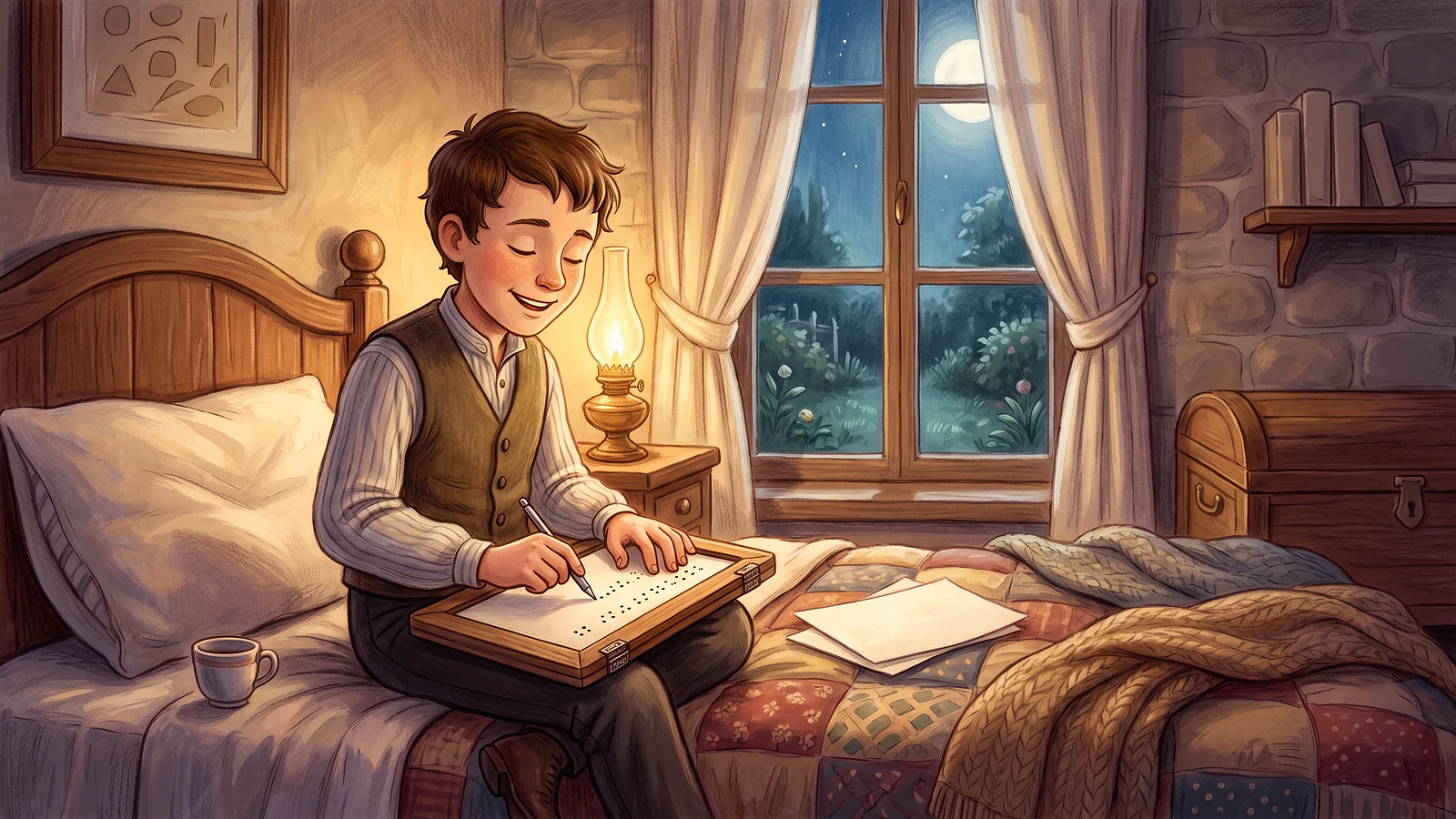
Louis Braille finished his alphabet when he was fifteen years old.
And then, for a long time, hardly anybody used it. The grown-ups who ran his school did not like it. They thought blind children should read the same letters everyone else did. At one point they banned it altogether.
The students learned it anyway, in secret, at night.
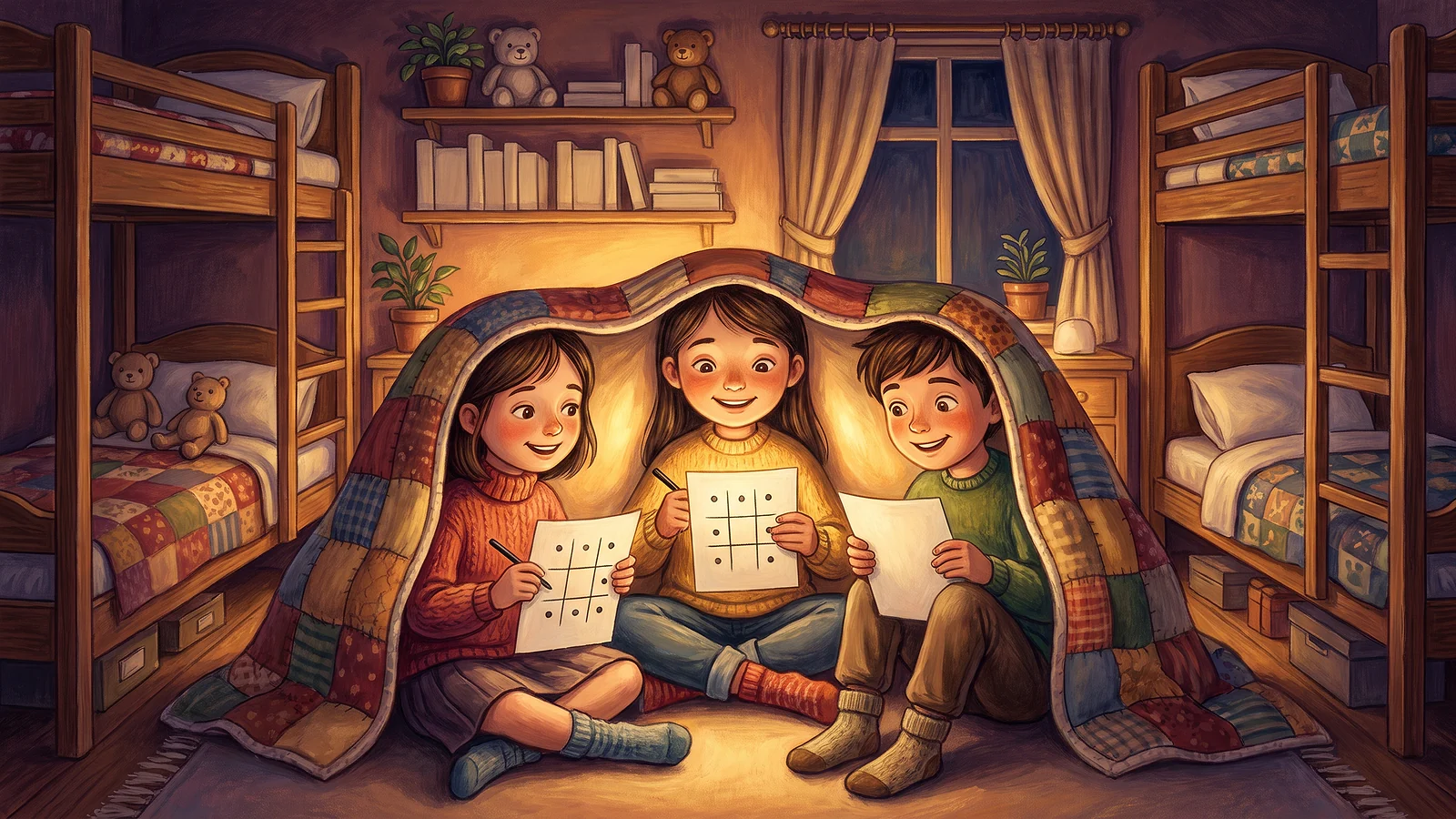
"Hide it," the older ones told the new ones. "Learn it anyway."
Louis never got to see it win. He died before that happened.
But he had been right. Two years after he died, his school taught his alphabet again, and it spread, country by country, until blind people everywhere were reading and writing with six small dots.
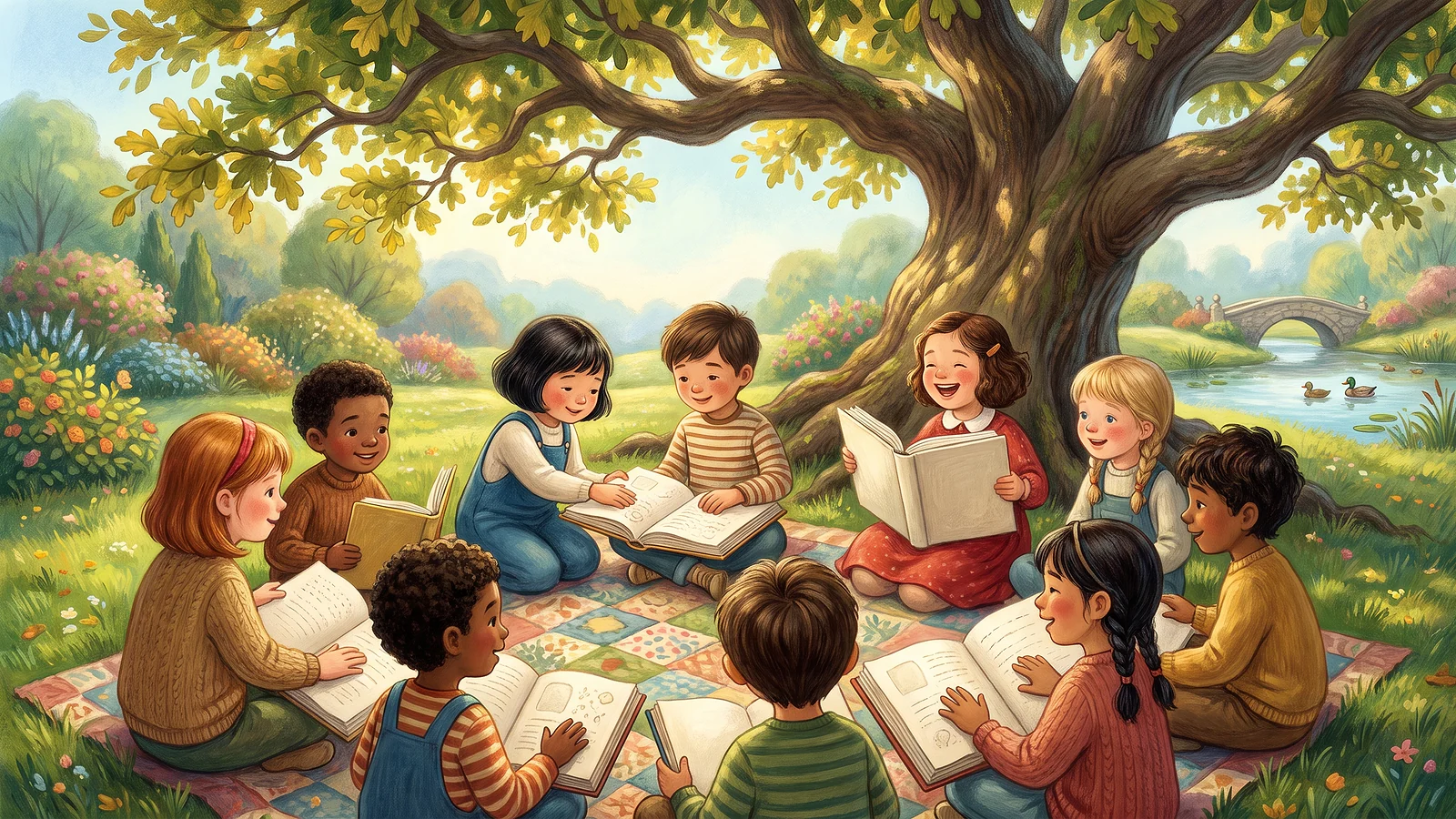
Somewhere tonight, a child is running a finger along a line of little bumps, and hearing a story.
The boy got the last word.